
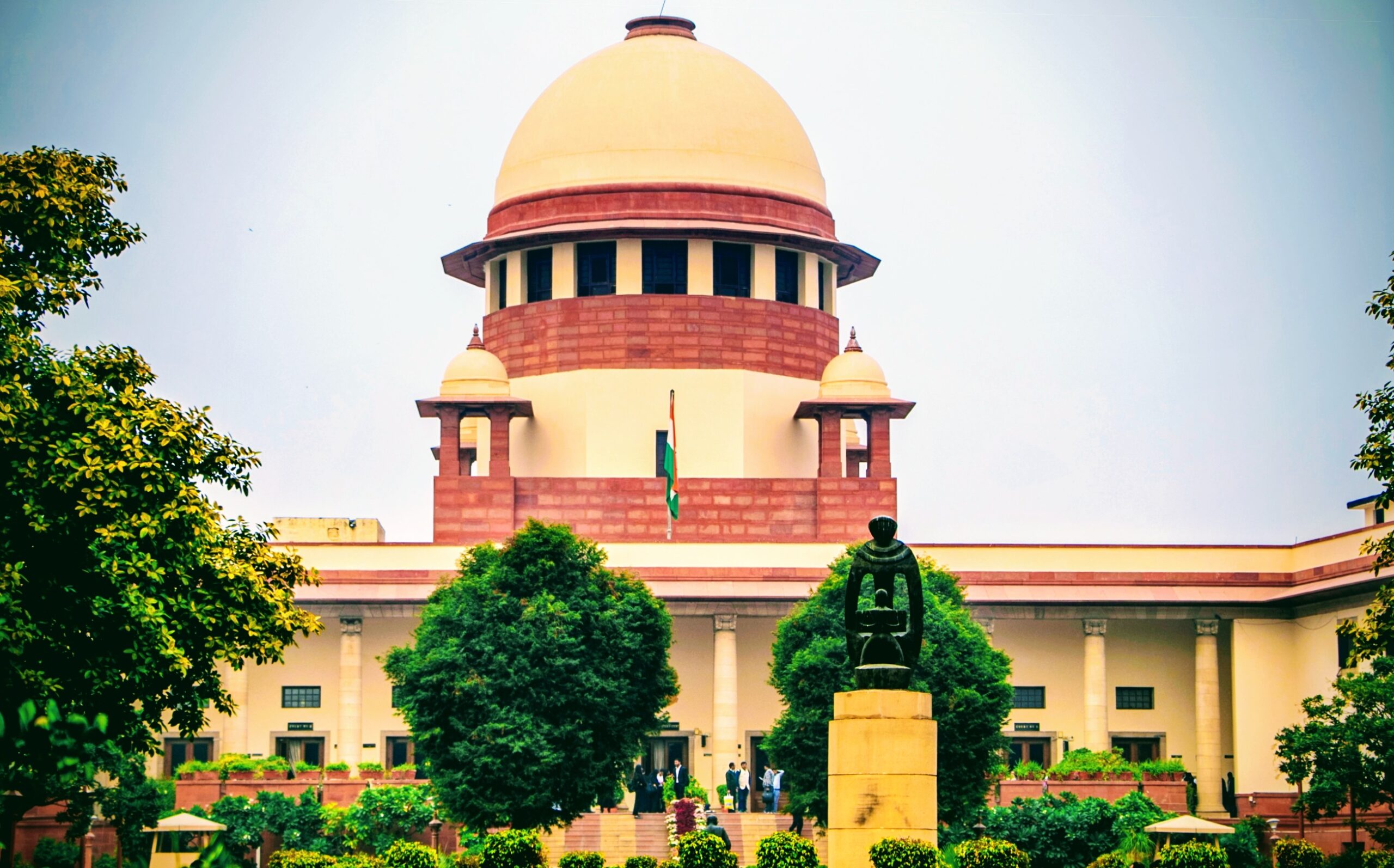
In a powerful judgment that reinforces the principle of public trust and the citizen’s right to quality infrastructure, the Supreme Court of India has recently delivered a significant verdict against the National Highways Authority of India (NHAI). The ruling establishes that the right to collect toll is intrinsically linked to the obligation of maintaining a motorable road.
Case Details
Case Title:** National Highways Authority of India & Anr. vs. O.J Janeesh & Ors.
Case Number: SLP(C) No. 22579/2025
Supreme Court of India
Bench: Hon’ble Chief Justice of India B.R. Gavai and Hon’ble Justice K. Vinod Chandran
The Core of the Dispute
The appeal before the Supreme Court arose from a judgment of the Kerala High Court. The High Court had suspended toll collection at the Paliyekkara toll plaza on NH-544 (in Thrissur district) due to the severely deteriorated and congested condition of the Edapally-Mannuthy stretch. Aggrieved by this order, the NHAI approached the Supreme Court.
The Supreme Court’s Decision and Key Observations
A bench led by Chief Justice B.R. Gavai unequivocally dismissed the NHAI’s appeal, affirming the Kerala High Court’s stance. The Court’s order is remarkable for its candid and forceful observations on the state of national highways and the toll collection regime:
1. A Reciprocal Right::- The Court firmly agreed with the High Court’s reasoning that a citizen’s payment of a user fee creates a corresponding right to demand a safe, unhindered, and well-maintained road. Failure to provide this constitutes a breach of the public’s legitimate expectation and strikes at the very foundation of the toll system.
2. A Stark Critique of the Toll System: The bench expressed profound concern over the existing model. It lamented the “comedy of errors” where a citizen, having already paid motor vehicle tax, is forced to pay an additional toll to navigate potholed roads. The Court critically noted that concessionaires often extract far more revenue than what is spent on construction and maintenance, while the roads fall into disrepair due to neglect.
3. The Human and Environmental Cost:- The judgment movingly highlighted the human toll—citizens waiting for hours in cramped queues with engines running, not only losing money but also patience, while toll collectors, often overworked, behave like “satraps.” This, the Court noted, is also a tragedy for the environment.
4. Personal Judicial Experience: Notably, both judges on the bench mentioned having personally experienced the infamous traffic congestion on this very route, adding a layer of direct accountability to their observations.
The Legal Principle Established
This judgment crystallizes a crucial legal principle: the obligation to pay toll is not absolute but is conditional upon the authority and its concessionaires upholding their end of the bargain—maintaining a roadworthy highway. The relationship between the NHAI and the public is fiduciary, bound by public trust. The moment this trust is violated by failing to ensure smooth traffic flow due to poor maintenance, the legal right to compel toll payment evaporates.
The Way Forward
The Supreme Court clarified that the suspension of toll collection is not permanent. The NHAI or the concessionaire can apply for its resumption the moment smooth traffic flow is restored. For any losses incurred during the suspension period, the concessionaire can seek remedies from the NHAI or request an extension of the concession period.
Conclusion: A Victory for Accountability
The Supreme Court’s decision in *NHAI v. O.J Janeesh* is a landmark victory for citizen rights and public accountability. It moves beyond mere rhetoric and establishes a enforceable legal doctrine that empowers commuters. It sends a clear message to authorities that they cannot monetize public infrastructure without upholding their concomitant duty to ensure its quality. This ruling sets a powerful precedent, potentially empowering citizens and courts across India to challenge arbitrary toll collections on dilapidated road
