Supreme Court Upholds Kerala High Court Order Directing Return of Thirunelly Temple Deposits
06-Dec-2025
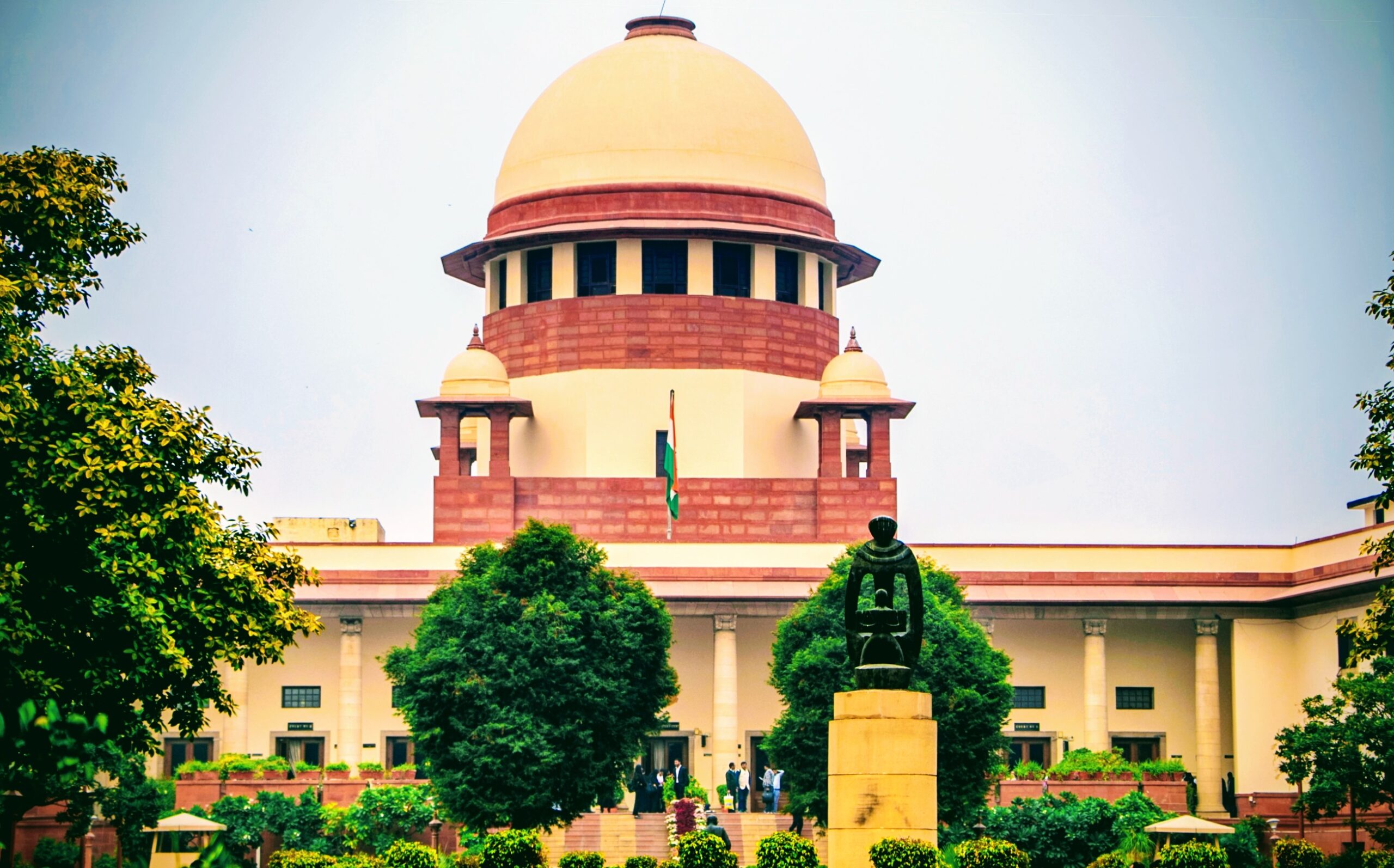
The Supreme Court on Friday reaffirmed the legal principle that temple funds constitute the property of the deity and must be safeguarded exclusively for temple purposes. A Bench comprising Chief Justice of India Surya Kant and Justice Joymalya Bagchi dismissed petitions filed by cooperative banks in Kerala that sought to retain fixed deposits belonging to the historic Thirunelly Temple Devaswom.
The cooperative banks had challenged the Kerala High Court’s direction to return the deposits within two months. However, the Supreme Court found no error in the High Court’s order, observing that temple money cannot become a lifeline for financially distressed cooperative banks. The Court noted that such funds should be placed in secure nationalised banks to ensure maximum returns and safety. The Bench granted liberty to the petitioners to seek more time from the High Court but declined to interfere with the substance of the order.
The Supreme Court on Friday observed that money belonging to a temple forms part of the deity’s property and cannot be utilised to salvage cooperative banks or aid them in their financial difficulties. The Bench of Chief Justice of India Surya Kant and Justice Joymalya Bagchi made the observation while hearing petitions filed by several cooperative banks in Kerala challenging a Kerala High Court judgment that directed them to return fixed deposits belonging to the Thirunelly Temple Devaswom. As the hearing commenced, the Bench questioned the very basis of the challenge and emphasised the sanctity of temple funds. Chief Justice Kant remarked, “You want to use the temple money to save the bank? What is wrong with directing that the temple money, instead of being in a cooperative bank which is breathing with great difficulty, should go to a healthy nationalised bank which can give maximum interest?” The Chief Justice further stressed that temple money belongs to the deity and must be protected and utilised only in the interest of the temple. It cannot be treated as a means of survival for cooperative banks.
Senior advocate Manu Krishnan G, appearing for the petitioning cooperative banks, argued that the High Court’s “abrupt” directive to return the deposits within two months caused operational hardship. He submitted that the banks had maintained a longstanding relationship with the temple, had even opened a special branch on its premises as per request, and had renewed fixed deposits consistently over the years.
The Bench, however, remained unconvinced. CJI Kant reminded the banks that credibility must be earned through trust and financial health. “If you are unable to attract customers and deposits, that is your problem,” he observed. Justice Bagchi added that cooperative banks are duty-bound to release deposits upon maturity, and the existence of a request for closure cannot be a determinant in refusing repayment. To this, counsel for the banks responded that no closure request had been made earlier and the banks were not opposing repayment but only concerned about the short deadline.
Ultimately, the Supreme Court dismissed the petitions, declining to interfere with the High Court’s direction. However, the Bench allowed the petitioners to approach the High Court for an extension of time to comply, if required. The petitions had been filed by Mananthawady Co-operative Urban Society Ltd and Thirunelly Service Cooperative Bank Ltd, among others, challenging an August judgment of the Kerala High Court. The High Court had passed the order after the Thirunelly Devaswom complained that the cooperative banks were refusing to repay fixed deposits despite repeated demands. The Court directed five cooperative societies Thirunelly Service Cooperative Bank Ltd, Susheela Gopalan Smaraka Vanitha Cooperative Society Ltd, Mananthawady Co-operative Rural Society Ltd, Mananthawady Co-operative Urban Society Ltd, and Wayanad Temple Employees Cooperative Society Ltd—to close the Devaswom’s deposits and repay the amounts within two months.
Case Description
Case Titles:
The Thirunelly Service Cooperative Bank Ltd and Another v. Sree Thirunelly Devaswom and Others, SLP(C) No. 34386/2025
The Mananthawady Co-operative Urban Society Ltd and Another v. Ravi Ulliyeri and Others, Diary No. 64079-2025
Court: Supreme Court of India
Bench: CJI Surya Kant and Justice Joymalya Bagchi
Date of Order: Friday (as per report)
Issue: Challenge to Kerala High Court direction to cooperative banks to return temple deposits to Thirunelly Devaswom
Result: Petitions dismissed; liberty granted to seek extension of time before the High Court
This article cover the point that property of temple belongs to Deity not cooperative. further you can read here important judgements and legal principles laid down by Hon’ble supreme court of India, this article is posted by Advocate Shivaji Rathore (J&K high court jammu) for more important legal topics stay connected with us, on tacit legal we post on YouTube channel also named as Tacit Legal helpful for Law students newely enrolled Advocate in India and other states, Follow us on Instagram also, Read our articles on important Questions of Law. #tacitlegal visit my website Tacit Legal dot com and search on google, this website is made from Hostinger and wordpress follow our latest updates for legal news follow us on YouTube also for young lawyers law students helpful for Advocates, this blog is written by Advocate Shivaji Rathore practicing in Jammu and Kashmir high court and district court at Jammu. The website Tacit Legal is available on Google created with Hostinger and wordpress keep in touch and read our daily articles and reporting for law students and advocates as we provide you important legal information on Tacit Legal.in