Shivaji Rathore 02-03-2026
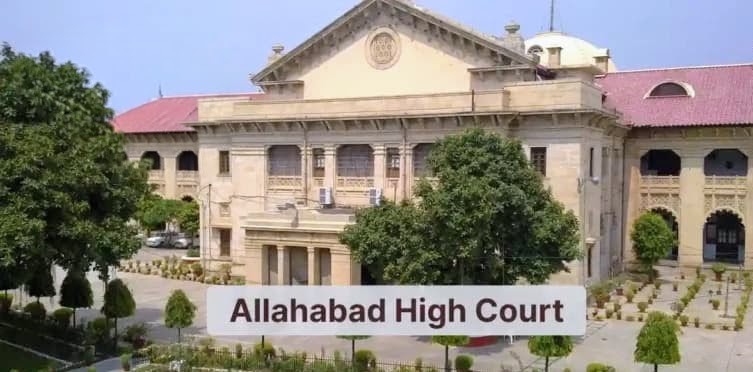
In a strong reaffirmation of judicial authority and constitutional supremacy, the Allahabad High Court recently observed that a Judicial Officer, while discharging judicial functions, stands above the District Magistrate, District Police Chief, and even the political executive of a State. The Court held that deliberate disregard of judicial orders is not merely contempt of court but a direct challenge to the authority of law itself. The significant ruling was delivered by Justice Arun Kumar Singh Deshwal, who came down heavily on erring police officials for ignoring repeated directions issued by the Chief Judicial Magistrate (CJM), Lalitpur.
Background of the Case
The matter arose from a bail application filed by Sanu alias Rashid, implicated in a cheating case. It was alleged that:
He was taken into custody on September 14, 2025, without formal arrest. On September 16, his sister moved an application before the CJM, Lalitpur, alleging illegal detention. An anticipatory bail application was also filed the same day.
The prosecution informed the court that he had been arrested on the morning of September 17, leading to dismissal of anticipatory bail on September 18. However, the CJM took serious note of the allegations and passed a series of stern orders on September 22, September 30, and November 3, 2025, directing the SHO and Investigating Officer (IO) to: Produce CCTV footage of the police station for relevant dates. Explain why a female co-accused, Rashida, was arrested at 4:00 AM, despite the settled legal position that a woman cannot be arrested after sunset and before sunrise except in exceptional circumstances. Despite repeated judicial directions, the CCTV footage was not produced.
Reliance on Supreme Court Precedents:- The CJM referred to the landmark judgment of the Supreme Court of India in Paramvir Singh Saini v. Baljit Singh, wherein mandatory installation and preservation of CCTV cameras in police stations was directed to curb custodial torture.
The High Court further relied upon:
D.K. Basu v. State of West Bengal — laying down safeguards against illegal detention. All India Judges Association v. Union of India emphasizing the unique constitutional status of judicial officers.
High Court Proceedings:- When the matter reached the High Court on February 4, 2026, the Court summoned the concerned SHO and IO. On February 18, both officers appeared and tendered unconditional apologies, contending that:
CCTV storage capacity was limited to 10 terabytes. Footage automatically got deleted after two months. Non-compliance was due to “inadvertence.” Justice Deshwal rejected this explanation, observing that the officers had deliberately failed to comply with the CJM’s orders.
The Court made a powerful remark:
“Here the question is not only the violation of personal liberty of a person enshrined in Articles 21 and 22 of the Constitution of India, but also disregard to the order of the judicial authorities, which has effect of demeaning the authority of law.”
Judicial Officers: Above Administrative and Executive Authorities In a significant constitutional observation, the Court stated:
“While a Judicial Officer (may be the Judicial Officer of Junior Division) is discharging his judicial function, he is above to the District Magistrate or District Police Chief and even to political head of a State.”
The Court clarified that judicial officers discharge sovereign functions of the State, and cannot be equated with executive officials or secretarial staff implementing executive policies.
The judgment emphasized: Courtrooms must command respect. District judiciary is the first line of defense for common citizens. Judicial officers form the backbone of the justice delivery system.
Contempt Proceedings and Punishment:& Exercising powers under Section 10 of the Contempt of Courts Act, 1971, the High Court held both the SHO and IO guilty of contempt for deliberate non-compliance. However, taking a lenient view on punishment, the Court sentenced them to remain in custody in the courtroom till the rising of the Court (4:00 PM).
Compensation for Illegal Detention
The Court found that the applicant had been illegally detained for three days without family intimation, constituting a violation of the guidelines laid down in D.K. Basu.
Accordingly:
The State Government was directed to pay ₹1 lakh as compensation. Liberty was granted to recover the amount from the salaries of the responsible police personnel.
Directions Regarding CCTV Inspection by Magistrates
In a path-breaking direction, the High Court ordered: All CJMs or concerned Magistrates shall randomly inspect police stations after court hours regarding functioning of CCTV cameras. Such inspection shall be treated as part of their official duty. Police officials must cooperate fully.
Any hindrance or disrespect toward judicial officers shall be dealt with strictly. The Court clarified that this direction is in furtherance of compliance with Paramvir Singh Saini.
Human Rights Courts Empowered
The High Court also clarified that Human Rights Courts at every district are competent to entertain complaints regarding: Illegal detention, Custodial violence, Human rights violations in police stations, Bail Granted with Condition. Ultimately, the applicant was granted bail upon undertaking to transfer ₹15 lakhs to the finance company of the first informant within 15 days.