Shivaji Rathore 03-March 2026
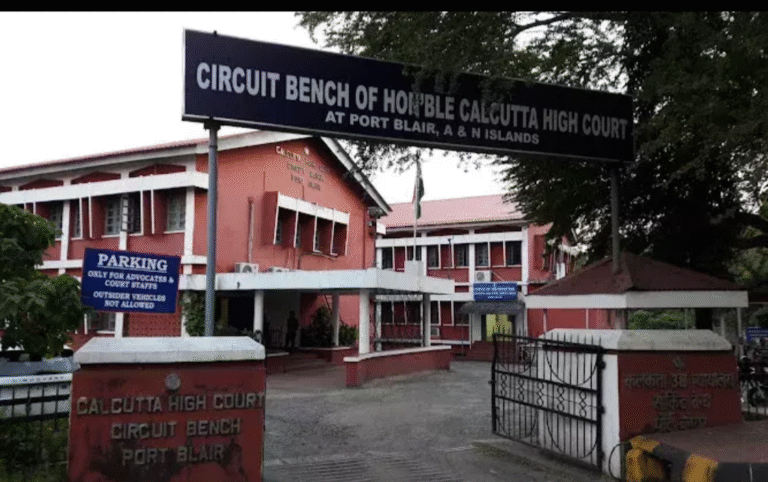
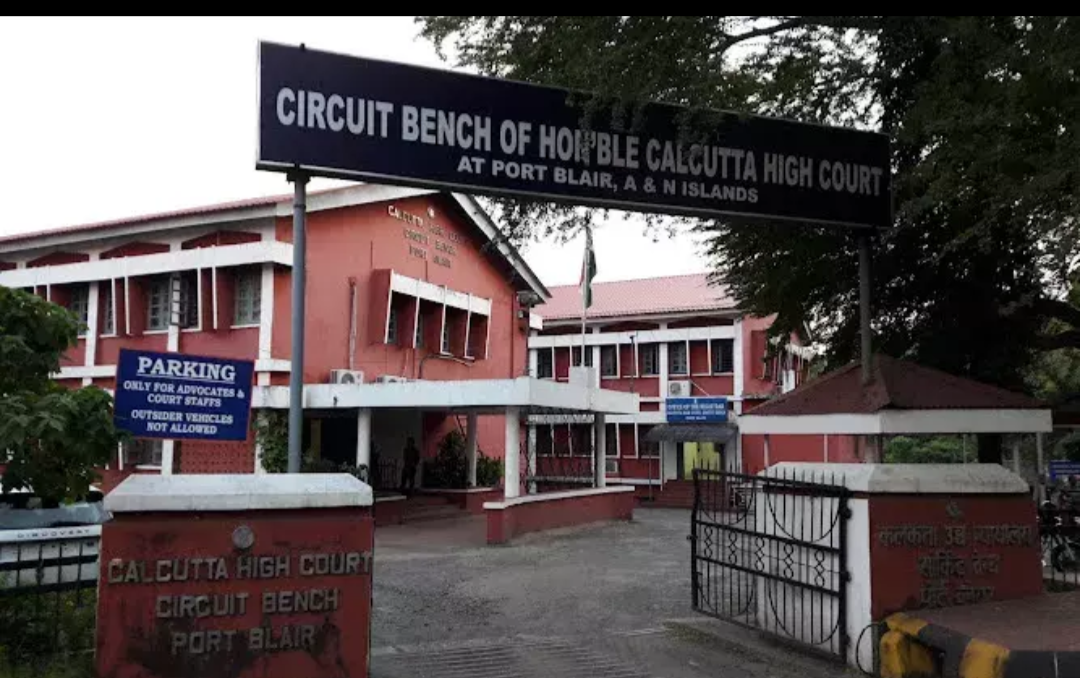
In a significant judgment reinforcing the Right to Health as part of Article 21, the Calcutta High Court (Circuit Bench at Port Blair) dismissed a writ petition filed by the Union of India challenging an order of the Central Administrative Tribunal (CAT).
The case, Union of India and Others vs. Amson and Another, reaffirms that: Retired government employees are entitled to medical reimbursement. Opting for Fixed Medical Allowance (FMA) does not bar reimbursement for life-saving treatment. Technical objections cannot defeat constitutional rights under Article 21.
The Division Bench comprising Justice Debangsu Basak and Justice Ajay Kumar Gupta delivered the judgment on 27 February 2026.
Facts of the Case
The father of the respondents was a graduate-trained teacher under the A&N Administration who retired on 31 July 2018.
In 2019, he was diagnosed with left temporoparietal glioblastoma, a life-threatening brain tumor. Initially admitted at G.B. Pant Hospital, Port Blair, he was referred to Chennai for specialized treatment, including surgery at Apollo Hospital and Apollo Proton Cancer Centre. The total medical expenditure amounted to ₹29,06,535/-.
However, reimbursement was denied on the following grounds:
The Central Services (Medical Attendance) Rules, 1944 do not apply to pensioners. The retired employee had opted for Fixed Medical Allowance (FMA). He was not registered under CGHS.
The CAT allowed the claim and directed reimbursement with 6% interest. The Union of India challenged this order before the High Court.
Key Legal Issues
Whether pensioners residing in non-CGHS areas are entitled to reimbursement.
Whether opting for FMA amounts to waiver of reimbursement rights.
Whether denial on technical grounds violates Article 21.
Scope of High Court interference with CAT orders.
Petitioners’ Argument
The Union of India contended:- The Office Memorandum dated 29.09.2016 clarified that CS (MA) Rules do not apply to pensioners. The deceased had opted for FMA and did not register under CGHS. Therefore, reimbursement was not permissible.
The CAT committed a manifest error of law.
Respondents’ Argument
The respondents relied heavily on the Supreme Court judgment in:
Shiva Kant Jha v. Union of India
They argued:
Right to medical treatment is integral to Article 21.
Pensioners cannot be denied reimbursement for life-saving treatment.
The real test is genuineness of treatment not technical compliance.
Authorities failed to inform the employee at retirement about available options.
Findings of the High Court
The High Court dismissed the writ petition and upheld the CAT order.
1. Right to Health is a Fundamental Right The Court reiterated that:- Right to health and medical aid is part of the right to life under Article 21.
The Court relied upon:
Shiva Kant Jha v. Union of India
Consumer Education and Research Centre v. Union of India
The Court emphasized that medical reimbursement cannot be denied when treatment is genuine and supported by records.
2. FMA is Not a Waiver of Reimbursement Rights The Court clarified:- Opting for Fixed Medical Allowance does not extinguish the right to claim reimbursement for specialized or indoor treatment. Life-saving treatment stands on a different footing.
3. Pensioners in Non-CGHS Areas Are Not Deprived
Referring to earlier Office Memorandums (1998 & 2016), the Court noted:- Pensioners should not be deprived of medical facilities in old age.
Departments have a duty to inform retiring employees about available options. Failure of the department cannot prejudice the pensioner.
4. Humane Approach Over Technical Rejection The Court strongly observed: – Authorities cannot adopt a mechanical or hyper-technical approach. A welfare state must adopt a humanitarian interpretation.
“May take their own decision” does not permit arbitrary rejection.
Principle Laid Down
The judgment crystallizes the following legal position:
Medical reimbursement claims of pensioners must be decided with a humane approach.
Denial solely due to non-registration or opting for FMA is impermissible.
High Court will interfere with CAT only if there is manifest error of law.
Right to life includes access to medical treatment even post-retirement.