Shivaji Rathore 13-Dec-2025
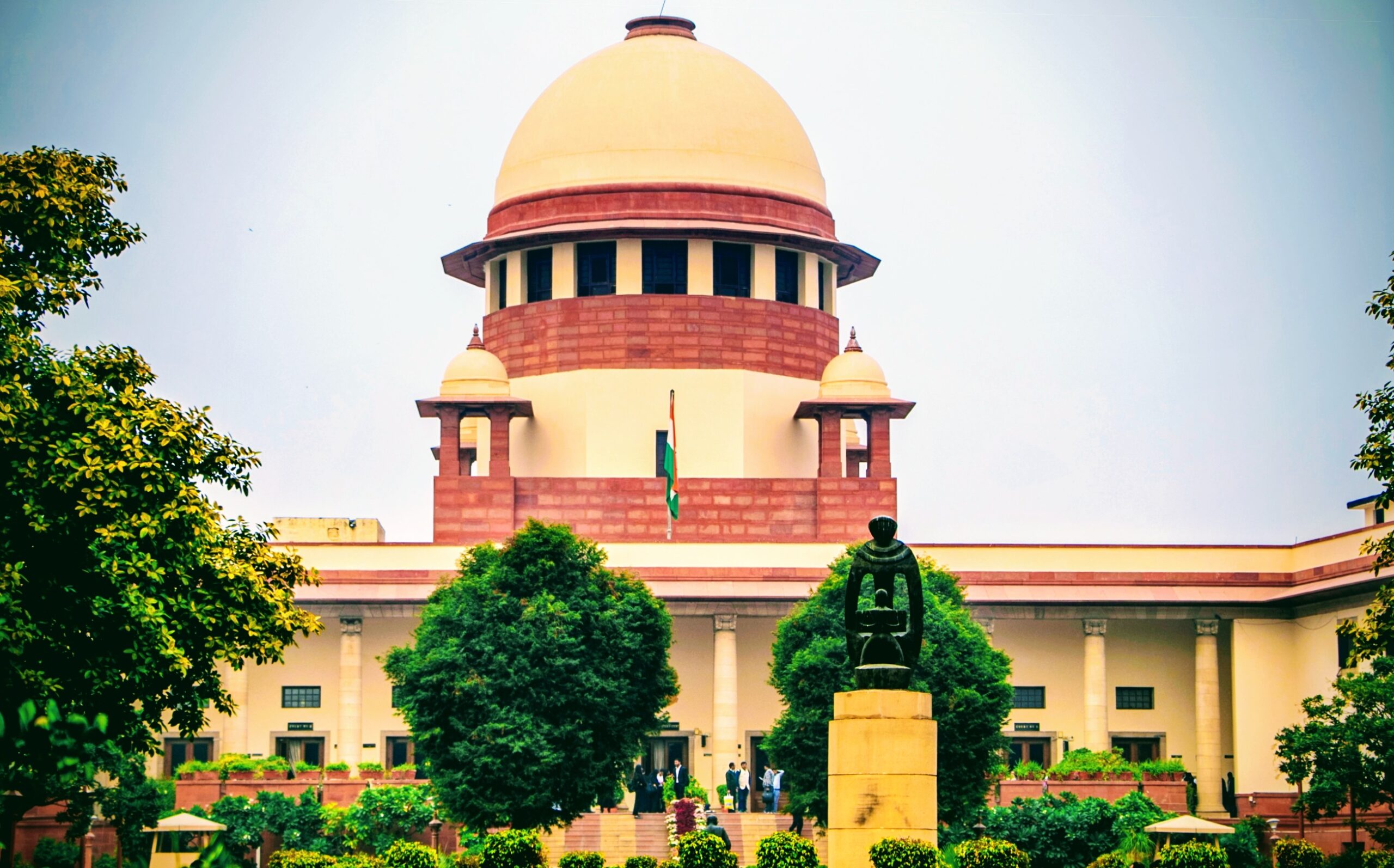
The Supreme Court on Friday (December 12) held that a person who has accepted a compassionate appointment cannot subsequently seek elevation by claiming that he ought to have been appointed to a higher post at the initial stage.The Court reiterated that compassionate appointment is an exception to the normal recruitment process, carved out only to provide immediate financial relief to the family of a deceased employee. Once an applicant accepts the post offered under the applicable compassionate appointment scheme, the appointment attains finality and the appointee is bound by the terms of the scheme. A Bench comprising Justice Rajesh Bindal and Justice Manmohan categorically observed that seeking appointment to a higher post after accepting compassionate employment would amount to permitting “endless compassion”, which is impermissible in law.
“Once the right of an applicant to be considered for appointment on compassionate grounds has been consummated, no further consideration is warranted. Once dependent of a deceased employee is offered employment on compassionate basis, his right stood exercised. Thereafter, no question arises for seeking appointment on a higher post. Otherwise, it would be a case of ‘endless compassion’.”
Appeals by State Allowed:- The Bench allowed the appeals filed by the Director of Town Panchayat, Tamil Nadu, setting aside the judgment of the Madras High Court which had upheld compassionate appointments to posts higher than those permissible under the scheme. As per the compassionate appointment scheme, a dependent of a deceased employee may be appointed against the post vacated due to death; however, no claim can be made for appointment to a post higher than that held by the deceased employee.
Facts of the Case
In the present case, the deceased employee was working as a Sweeper. His dependent was accordingly granted compassionate appointment to the post of Sweeper. Claiming that he fulfilled the eligibility criteria for a higher post and that similarly situated persons had been granted higher appointments, the dependent approached the Madras High Court seeking appointment to the post of Junior Assistant.
The Single Judge allowed the plea, which was later affirmed by the Division Bench. Aggrieved, the State authorities approached the Supreme Court. Mere Eligibility Not a Ground for Higher Compassionate Appointment Setting aside the impugned orders, Justice Bindal, authoring the judgment, relied upon the decision in State of Rajasthan v. Umrao Singh, (1994) 6 SCC 560 to hold that mere eligibility for a higher post does not create a right to compassionate appointment on such post, nor does it entitle the appointee to claim seniority or elevation. The Court reaffirmed that compassionate appointment is not a mode of recruitment, but a narrowly tailored exception governed strictly by the scheme in force.
Doctrine of Negative Equality Applied:- The respondents’ argument that other similarly situated persons were granted higher posts was also rejected. The Court held that such a claim was based on the doctrine of negative equality, which has no place in constitutional jurisprudence.
“The further claim of seeking appointment on a higher post cannot be based on the sole premise that another similarly placed person was granted such benefit. It is a settled proposition of law that an illegality committed by an authority cannot be validated and further perpetuated by its extension to other similarly placed persons.”
The Court clarified that an illegal benefit granted to one person cannot be used as a precedent to demand similar illegal benefits by others.
Conclusion
Accordingly, the Supreme Court allowed the appeals and set aside the High Court’s orders, reaffirming that compassionate appointment schemes must be applied strictly and uniformly, without permitting post-acceptance claims for higher posts.
Cause Title
The Director of Town Panchayat & Ors. v. M. Jayabal & Anr. etc. (and connected cases)
- How to Defreeze Bank Accounts Frozen by Cyber Cell or Police: Landmark Judgments & Legal Remedies
 Shivaji Rathore 23 March 2026 Freezing of bank accounts by Cyber Cells and Police Authorities has become a
 - Section 302 vs Section 304 IPC: Distinction at the Stage of Framing Charge
 J&K High Court holds that intent and premeditation cannot be ruled out at charge stage based on limited
 - Criminal Conspiracy under IPC: Meeting of Minds and Legal ThresholdNot Just Agreement, But Intent: The Law on Criminal Conspiracy Shivaji Rathore 21 March 2026 The High Court
- Revisional Jurisdiction of High Court in Charge/Discharge Orders: A Narrow and Exceptional Power
 Shivaji Rathore 21 March 2026 The High Court of Jammu & Kashmir and Ladakh has reiterated the settled
 - Framing of Charge vs Discharge: Limits of Judicial Scrutiny at the Threshold StageHigh Court Reiterates: No Mini-Trial at the Stage of Framing Charges Shivaji Rathore 21 March 2026 The High
- Accidental Injuries Not ‘War Injuries’ Without Operational Nexus: J&K High Court Clarifies Pension EntitlementOperational Nexus Essential for Claiming War Injury Pension, Rules High Court Shivaji Rathore, 21 – March- 2026 In
- Pension Not Untouchable After Credit: J&K High Court Clears Way for Recovery
 Retired Guarantor Held Liable as Court Draws Line on Post-Credit Protection Shivaji Rathore 21 March 2026 The Jammu
 - Supreme Court Quashes Copyright Infringement Case Against Sujoy Ghosh: A Strong Reaffirmation Against Frivolous Criminal Prosecution
 Shivaji Rathore 20 March 2026 In a significant ruling, the Supreme Court of India quashed criminal proceedings initiated
 - Disciplinary Proceedings After Retirement: Legal Position on Pension Reduction and Bank Employees’ MisconductShivaji Rathore 20 March 2026 Disciplinary proceedings in service law often raise complex questions when an employee retires
- Allahabad High Court Quashes Rape Case Based on Failed Promise of Marriage
 Shivaji Rathore 17 March 2026 In a significant judgment addressing the misuse of criminal law in consensual relationships,
 - Union Government Revokes NSA Detention of Environmental Activist Sonam Wangchuk14 Mrach 2026 The Union Government has revoked the preventive detention of noted environmental activist and innovator Sonam
- Supreme Court Disposes Plea Seeking Mandatory Paid Menstrual Leave; Asks Centre to Consider Policy Representation13 March 2026 The Supreme Court of India on Friday disposed of a writ petition seeking directions for
- J&K High Court Says:- Accused must Explain circumstances within his Knowledge
 Although the prosecution carries the primary burden of proving the guilt of the accused, courts are empowered to
 - Supreme Court Clarifies Limits of Section 27 Evidence and Reiterates Benefit of Doubt in Circumstantial CasesEvidence Act, 1872 :- Section 27: Admissibility of statements made by accused:- in custody; Statement made by accused
- Supreme Court: Non-Parties Can Be Held Liable for Contempt If They Knowingly Aid Disobedience of Court OrdersShivaji Rathore 04-03-2026 The Supreme Court has clarified that even persons who were not parties to the original
- Calcutta High Court Upholds Medical Reimbursement Rights of Pensioners Under Article 21
 Shivaji Rathore 03-March 2026 In a significant judgment reinforcing the Right to Health as part of Article 21,
 - Allahabad High Court: Disregard of Judicial Orders Is a Direct Challenge to the Authority of LawShivaji Rathore 02-03-2026 In a strong reaffirmation of judicial authority and constitutional supremacy, the Allahabad High Court recently
- Supreme Court Reiterates: No “Mini-Trial” While Deciding Section 319 CrPC ApplicationsTacit Legal 24 feb 2026 In a significant judgment strengthening the scope of Section 319 CrPC, the Supreme
- Supreme Court: Child Custody Cannot Be Decided on “Welfare Alone”; Conduct, Financial Capacity & Educational Stability Also RelevantTacit Legal 19 – Feb – 2026 Supreme Court of India has reiterated that while the welfare of
- Supreme Court: Insurer Can Be Directed to “Pay and Recover” Even for Gratuitous Passenger in Goods Vehicle If Travel Was IncidentalTacit Legal 19-feb 2026 In a significant ruling strengthening the principle of “pay and recover” in motor accident
- Supreme Court: Absconder Cannot Claim Parity for Anticipatory Bail Merely Because Co-Accused Were AcquittedTacit Legal 15-Feb-2026 In a significant ruling reinforcing the sanctity of the criminal justice process, the Supreme Court
- Supreme Court: Preliminary Inquiry Not Mandatory Before FIR Under Prevention of Corruption Act Prevention of Corruption Act, 1988In a significant ruling strengthening anti-corruption jurisprudence, the Supreme Court has reiterated that a preliminary inquiry is not
- Husband Cannot Evade Maintenance Liability Merely Because Wife Is Educated or Has Parental Support: Supreme CourtShivaji Rathore 04-Feb-2026 In a significant reaffirmation of women’s right to live with dignity after divorce, the Supreme
- Default in Filing Written Statement Does Not Mean Automatic Decree: Supreme Court Clarifies Scope of Order VIII Rule 10 CPC01-Feb-2026 In a significant ruling reaffirming foundational principles of civil justice, the Supreme Court of India has held
- Allahabad High Court Mandates Prosecution for False FIRs: Police Officers Face Liability for Non-ComplianceShivaji Rathore 30-01-2026 In a far-reaching and precedent-setting judgment, the Allahabad High Court has issued a strict mandamus
- Supreme Court Keeps UGC Promotion of Equity Regulations, 2026 in Abeyance; Revives 2012 FrameworkShivaji Rathore 29-01-2026 The Supreme Court of India on Thursday ordered that the University Grants Commission (Promotion of
- Supreme Court Clarifies Magistrate’s Powers Under Section 175(4) BNSS in Cases Against Public ServantsShivaji Rathore, 28-01-2026 The Supreme Court laid down an authoritative interpretation of Section 175(4) of the Bharatiya Nagarik
- Power of Magistrate to Monitor Investigation and Registration of FIRTACIT LEGAL 21-01-2026 One of the most common grievances faced by complainants in criminal law is the non-registration
- Pre-Cognizance Hearing Not Mandatory in Cheque Dishonour Cases: J&K High CourtSection 223 BNSS Inapplicable to Proceedings under Section 138 NI Act Tacit Legal 20 Jan 2025 In a
- Supreme Court Delivers Split Verdict on Constitutionality of Section 17A of Prevention of Corruption ActTop Court Divided on Whether Prior Government Approval for Corruption Investigations Is Constitutional Tacit Legal 13-Jan-2026 A two-judge
- Marrying Outside District Does Not Give Automatic Local Residence Benefit in Government Jobs: J&K High CourtJammu & Kashmir and Ladakh High Court Reaffirms Proof-Based Local Residence in Public Recruitment Shivaji Rathore 12 jan
- Magistrate Cannot Discharge Accused at Section 251 CrPC Stage in Summons Cases: Delhi High CourtOnce Cognizance Is Taken and Summons Issued, Magistrate Lacks Power to Recall Process, Rules Court Court Shivaji Rathore
- POCSO Trial Truncated Midway: Court Orders Release of Accused After DNA Mismatch and Victim’s Clear Exoneration
 Sessions Court Holds Continuation of Trial a Futile Exercise Where Chances of Conviction Are Nil Shivaji Rathore 09-01-2026
 - J&k cooperative housing society held to be a “Public Authority” under RTIShivaji Rathore 9-1-2026 In a significant ruling reinforcing transparency and accountability, the High Court of Jammu and Kashmir
- Bombay High court holds using old number plate on unregistered vehicle not cheating or forgery
 Shivaji Rathore 08-01-2026 The Bombay High Court has ruled that driving an unregistered vehicle by affixing an old
 - Intention and knowledge||section 304 IPC | supreme court explain culpable homicide amounting to murder|Supreme Court Converts Murder Conviction to Culpable Homicide, Citing Absence of Intention to Kill Shivaji Rathore 08-01-2025 The
- Supreme Court Reiterates Wide Powers of Magistrate to Ensure Proper Police InvestigationMonitoring of FIR under section 156(3) Shivaji Rathore 07-01-2026 The Supreme Court of India, in its landmark judgment
- Calcutta High Court Reiterates Three Tests for Judgment on Admission Under Order XII Rule 6 CPCAdmission Must Be Clear, Unequivocal and Free From Triable Issues: Court Shivaji Rathore 03-01-2026 The Calcutta High Court
- J&K High Court Grants Bail to J&K Bank Manager in Alleged Loan Fraud Case, Reiterates “Bail Is the Rule”Court cautions against converting pre-trial detention into punishment, relies on Supreme Court precedents on personal liberty Shivaji Rathore
- Delhi High Court Passes John Doe Order Protecting Pawan Kalyan’s Personality Rights Against Unauthorized Commercial Exploitation
 Court Holds Unauthorized Use of Name, Image, Voice and Likeness for Merchandise and AI Content Violates Personality Rights
 - Supreme Court: Charges Once Framed Cannot Be Deleted Using Section 216 CrPCSection 216 CrPC Limited to Addition or Alteration of Charges Shivaji Rathore 02-01-2026 The Supreme Court of India,