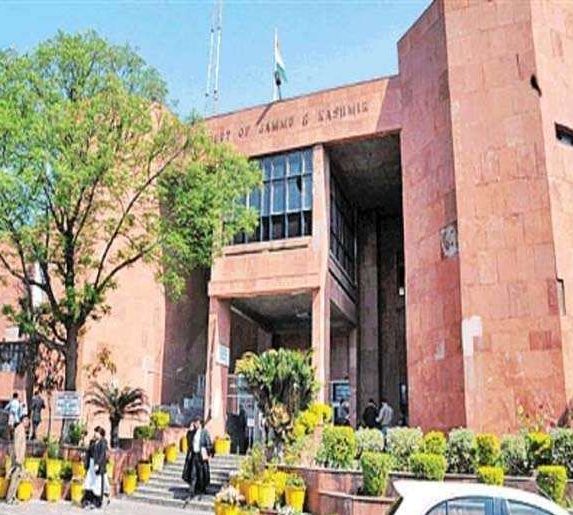
Case Details
Case Title: Farooq Ahmad Sheikh Vs Tariq Ahmad Malik 2024
Coram: Justice Tashi Rabstan & Justice M. A. Chowdhary
Counsel: Mr. Areeb Javed Kawoosa, Advocate for the appellants; Mr. M. A. Qayoom and Mr. Mohsin-ul-Showkat Qadri, Sr. AAGs for the respondents.
Introduction
In a landmark ruling, the High Court of Jammu & Kashmir and Ladakh has clarified the scope of who qualifies as a “necessary party” in writ proceedings. The Court emphasized that the principle under Order 1 Rule 10(2) of the Civil Procedure Code (CPC) cannot be applied mechanically to writ petitions. Unlike civil suits, where impleadment depends on established title or direct interest, the Writ Court must consider whether the outcome of its decision will vitally affect individuals who may not be on record.
Background of the Case
The controversy arose from a writ petition filed by residents of Sozeth and Ranbirgarh, seeking to restrain authorities from interfering with their land-filling activities. Farooq Ahmad Sheikh and Shaheen Farooq sought impleadment in the case, arguing that the filling of land and proposed construction directly impacted their adjacent property.
The writ court, however, dismissed their application, citing lack of clear title and casting doubts on their claims. Aggrieved, the applicants filed a Letters Patent Appeal (LPA) before the High Court, contending that their interests were deeply connected with the dispute and that the unauthorized activities were detrimental to their land.
Arguments Advanced
Appellants’ Position:
The appellants, represented by Advocate Areeb Javed Kawoosa, argued that their property rights and access would be seriously prejudiced if the writ petition succeeded without their participation. They pointed to contradictions in the petitioners’ claims and highlighted the adverse impact of construction on their adjacent land.
Respondents’ Stand:
The respondents countered that the appellants had no enforceable title and were thus strangers to the proceedings. They argued that the relief sought in the writ petition did not concern the appellants’ property and, therefore, they could not be impleaded as necessary parties.
Court’s Observations
The Division Bench undertook a detailed comparison between impleadment in civil suits and in writ petitions. Referring to the Supreme Court’s ruling in Prabodh Verma & Ors. v. State of Uttar Pradesh & Ors., the Court noted that writ jurisdiction requires a broader outlook, as its decisions often extend beyond the immediate parties on record.
Key observations included:
In civil suits, impleadment depends on a demonstrable title or direct interest.
In writ petitions, the determining factor is whether the applicant would be vitally affected by the decision, regardless of ownership proof.
The Writ Court has a duty to ensure that no party whose rights stand to be materially impacted is excluded from the proceedings.
The Bench criticized the writ court’s narrow view of Order 1 Rule 10 CPC, holding that restricting impleadment to title-holders alone overlooks the wider consequences of writ jurisdiction.
Judgment
Applying these principles, the High Court concluded that the appellants’ potential loss of property use and access was sufficient to establish their status as necessary parties. The writ court’s order was thus set aside, and the appellants were directed to be impleaded as respondents in the pending writ petition.
Significance of the Ruling
This judgment significantly widens the horizon of “necessary party” in writ petitions. It underscores the proactive role of Writ Courts in safeguarding rights not just of those directly before it, but also of individuals who may be indirectly or vitally impacted.
By broadening the interpretation of Order 1 Rule 10 CPC in the writ jurisdiction, the J&K&L High Court has set a precedent ensuring fair hearing, inclusivity, and complete adjudication of disputes.