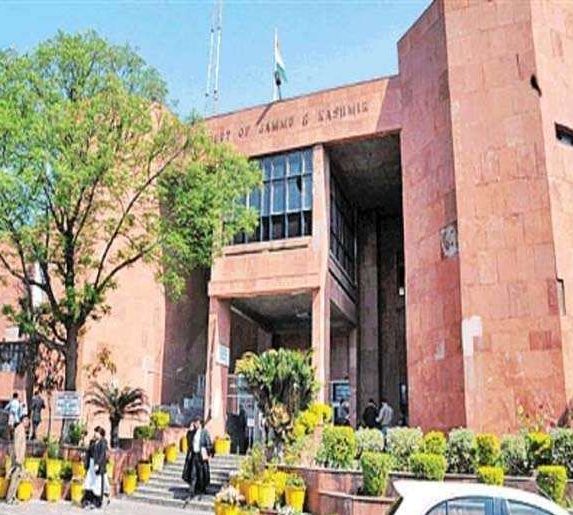
High Court Reiterates: No Mini-Trial at the Stage of Framing Charges
Shivaji Rathore 21 March 2026
The High Court of Jammu & Kashmir and Ladakh, has once again clarified the settled legal position governing framing of charges and discharge of accused in criminal trials, emphasizing that courts must strike a careful balance between judicial scrutiny and premature evaluation of evidence.
The judgment provides an authoritative restatement of principles governing prima facie satisfaction, grave suspicion, and limits of judicial review at the pre-trial stage.
Prima Facie Case vs Detailed Appreciation of Evidence
The Court reiterated that while considering whether to frame a charge, the trial judge is empowered to “sift and weigh” the evidence, but only for a limited purpose namely, to determine:
Whether a prima facie case exists, or Whether the material raises a grave and unexplained suspicion against the accused.
Importantly, the Court clarified that this exercise does not permit a detailed evaluation of evidence, as would be done during trial. Judge Not a “Post Office” of Prosecution A key highlight of the ruling is the Court’s firm stance that a judge cannot act as a mere conduit for the prosecution case.
The Court held that:
The judge must consider broad probabilities of the case Evaluate the total effect of evidence and documents Identify any inherent infirmities in the prosecution material However, this evaluative role is restricted and cannot extend to conducting a roving inquiry into the merits of the case.
No Mini-Trial at the Stage of Charge:- The High Court strongly cautioned against converting the stage of framing charge into a mini-trial.
It observed that: Courts must not weigh evidence as if determining guilt or innocence Defences such as contradictions, credibility of witnesses, or alternative theories are premature at this stage Detailed appreciation of evidence is the exclusive domain of trial Thus, any attempt to adjudicate disputed facts at this stage would defeat the purpose of criminal procedure.
When Should Charges Be Framed? The Court laid down a clear test: If the material on record discloses sufficient grounds to presume that the accused has committed an offence.
Charge must be framed
If the material is groundless or raises only mere suspicion (not grave suspicion Accused must be discharged This presumption is not proof beyond reasonable doubt, but a tentative judicial opinion based on available material.
Grave Suspicion: The Key Threshold, A crucial takeaway from the judgment is the distinction between:
Mere suspicion → insufficient to proceed
Grave suspicion → sufficient to frame charges
Even strong suspicion, if supported by material on record, is enough to justify a full-fledged trial.
Application of Principles by the Court:: — Applying the above principles, the High Court: Upheld the framing of charges where material disclosed active participation or conspiracy
Approved discharge where: Evidence was contradictory or inherently improbable, There was mere presence without overt act Allegations lacked credible linkage with the offence
This demonstrates that while the threshold is low, it is not mechanical judicial application of mind remains essential.
Conclusion
This judgment reinforces a vital procedural safeguard in criminal law: The stage of framing charges is not about proving guilt, but about determining whether the accused should face trial.
By reaffirming that courts must avoid both blind acceptance of prosecution claims and premature evaluation of evidence, the High Court has struck a careful balance between: Protecting individuals from baseless prosecution, and Ensuring that serious allegations proceed to trial where warranted The ruling serves as a crucial guide for trial courts, practitioners, and litigants on the true scope and limits of judicial intervention at the threshold stage of criminal proceedings.
Case details :- Crl R No. 61/2024, CrlM No. 1908/2024 c/w Crl R No. 65/2024, Bail App. No. 292/2024, CrlM No.
1907/2024, CrlM No. 1960/2024, CrlM No. 2046/2024, CrlM No. 99/2025, Bail App. No. 319/2024, Crl
R No. 1/2025, CrlM No. 2/2025, Bail App. No. 1/2025, Bail App. No. 4/2025, Crl R No. 5/2025, CrlM
No. 34/2025, Crl R. No. 18/2025, CRM(M) No. 418/2025, CrlM No. 831/2025, Crl R No. 2/2025 and
CrlM No. 3/2025