Detaining authority failed to inform the detenue
Case Title
Mohd. Waqar Bhatti vs. Union Territory of Jammu & Kashmir & Ors.
HCP No. 50/2025
Reserved on: 25 September 2025
Pronounced on: 9 October 2025
Coram: Hon’ble Mr. Justice M.A. Chowdhary
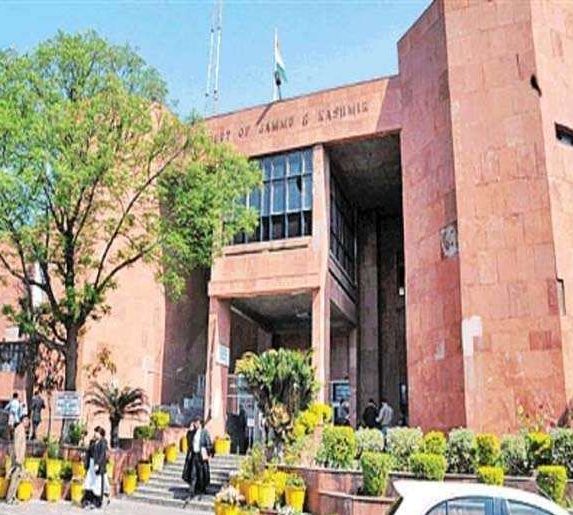
Court: High Court of Jammu & Kashmir and Ladakh at Jammu
The Jammu and Kashmir High Court, in a recent landmark judgment, quashed the preventive detention order of Mohd. Waqar Bhatti, passed under the J&K Public Safety Act (PSA), 1978, holding that the detention was issued mechanically and in violation of constitutional safeguards under Article 22(5) of the Constitution of India.
The Court found that the detaining authority failed to inform the detenue about his right to make a representation, did not supply all relevant documents, and merely copied the police dossier while drafting the detention order — all of which rendered the detention illegal.
Case Background
The petitioner, Mohd. Waqar Bhatti, a resident of Saaj village, Tehsil Thanamandi, District Rajouri, was detained by the District Magistrate, Rajouri, under Order No. DMR/PSA/01 of 2025 dated 21.02.2025, on the grounds that his activities were prejudicial to the maintenance of public order.
The detention was based on several FIRs from 2018 to 2025, including charges under various provisions of the RPC and BNS. The petitioner challenged the detention order through a Habeas Corpus Petition, alleging violations of his constitutional and statutory rights.
Key Legal Grounds Raised by the Petitioner
1. Failure to Inform Right to Representation:
The petitioner was not informed that he could file a representation to the detaining authority or about the time frame for doing so.
2. Non-Supply of Relevant Material:
All documents relied upon by the detaining authority were not supplied to the petitioner nor explained in the language he understood.
3. Mechanical Detention Order:
The grounds of detention were a verbatim copy of the police dossier, showing non-application of mind by the District Magistrate.
4. Suppression of Vital Facts:
One of the FIRs cited (FIR No. 303/2018) had already resulted in acquittal, but this fact was concealed from the detaining authority.
Findings and Observations of the Court
1. Violation of Article 22(5) – Failure to Inform of Representation Right
The Court noted that the communication from the District Magistrate only mentioned that the detenue “may make a representation to the Government,” but omitted to mention his right to represent before the detaining authority itself before approval by the Government.
Citing Jitendra vs. District Magistrate, Barabanki (2004 Cri.L.J 2967), the Court held that partial communication of such a right vitiates the detention.
“On this count alone, the impugned detention order cannot sustain and is liable to be quashed.” — Justice M.A. Chowdhary
2. Non-Supply of Complete Record
The record showed the detenue had received some documents, but no affidavit from the executing officer confirmed that all relied-upon materials were supplied or explained in his language.
This was held to be a violation of the detenue’s right to make an effective representation, relying on State of Maharashtra v. Santosh Shanker Acharya (AIR 2000 SC 2504).
3. Non-Application of Mind by the Detaining Authority
The Court found that the grounds of detention were almost a replica of the police dossier, with only minor word changes, showing that the order was passed mechanically without independent satisfaction.
Citing Jai Singh v. State of J&K (1985) 1 SCC 561 and Rajesh Vashdev Adnani v. State of Maharashtra (2005) 8 SCC 390, the Court reiterated that such duplication indicates non-application of mind.
4. Constitutional Protection of Personal Liberty
Reiterating the principle in Icchu Devi Choraria v. Union of India (AIR 1980 SC 1983), the Court emphasized that personal liberty is a cherished right and even the slightest procedural violation can invalidate detention.
Court’s Conclusion
The High Court held that the detention order was arbitrary, mechanical, and unconstitutional, as multiple procedural lapses rendered it unsustainable.
Accordingly, the detention order dated 21.02.2025 was quashed, and the detenue was directed to be released forthwith, if not required in any other case.
Legal Takeaways
1. Failure to inform detenue of representation rights before the detaining authority violates Article 22(5).
2. Non-supply of relied-upon documents amounts to denial of fair opportunity.
3. Copy-paste detention grounds from the police dossier demonstrate non-application of mind.
4. Personal liberty cannot be curtailed without strict adherence to constitutional safeguards.
Keywords:
Jammu and Kashmir High Court judgment 2025, PSA detention quashed, preventive detention rights, Article 22(5) India, J&K Public Safety Act, personal liberty judgment, District Magistrate Rajouri detention order, Tacit Legal
- How to Defreeze Bank Accounts Frozen by Cyber Cell or Police: Landmark Judgments & Legal RemediesShivaji Rathore 23 March 2026 Freezing of bank accounts by Cyber Cells and Police Authorities has become a
- Section 302 vs Section 304 IPC: Distinction at the Stage of Framing ChargeJ&K High Court holds that intent and premeditation cannot be ruled out at charge stage based on limited
- Criminal Conspiracy under IPC: Meeting of Minds and Legal ThresholdNot Just Agreement, But Intent: The Law on Criminal Conspiracy Shivaji Rathore 21 March 2026 The High Court
- Revisional Jurisdiction of High Court in Charge/Discharge Orders: A Narrow and Exceptional PowerShivaji Rathore 21 March 2026 The High Court of Jammu & Kashmir and Ladakh has reiterated the settled
- Framing of Charge vs Discharge: Limits of Judicial Scrutiny at the Threshold StageHigh Court Reiterates: No Mini-Trial at the Stage of Framing Charges Shivaji Rathore 21 March 2026 The High