J&K and Ladakh High Court Dismisses Batamaloo Shop Allotment Challenge; Holds 12-Year Interim Stay Caused ₹3 Crore Loss to Public Exchequer
Shivaji Rathore 18-Dec-2025
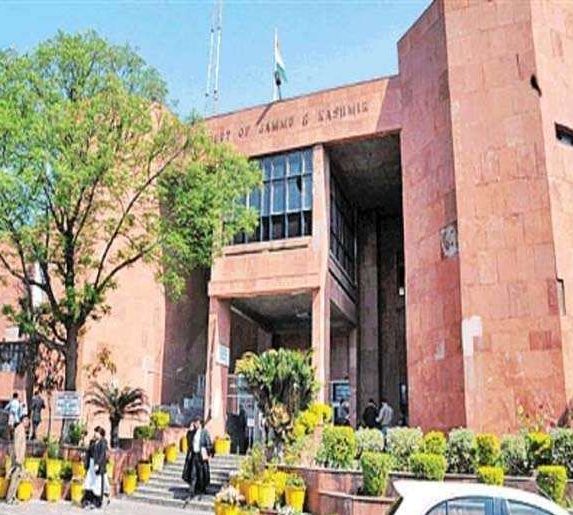
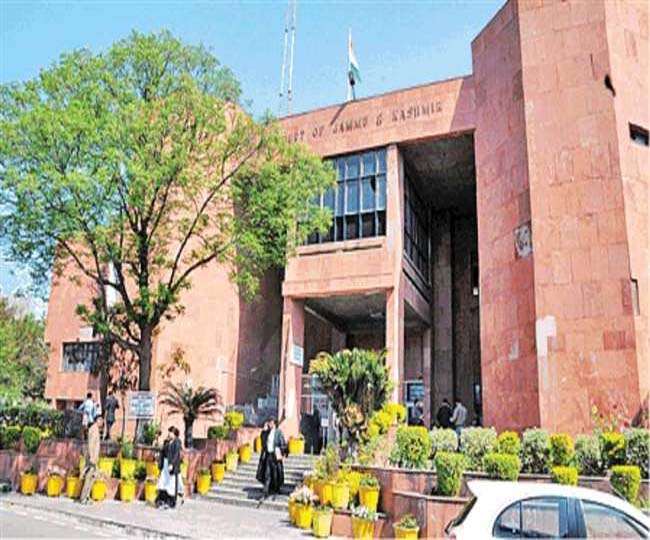
The High Court of Jammu & Kashmir and Ladakh has dismissed a writ petition challenging the rehabilitation and allotment of shops in the Sector-6 Shopping Complex, Batamaloo, Srinagar, holding that the petition was misconceived, devoid of merit, and a clear abuse of the process of law. The Court further held that prolonged litigation, sustained by an interim order for over twelve years, resulted in huge financial loss to the public exchequer and irreparable prejudice to genuine and eligible claimants. While vacating an interim order dated 03 June 2013, Justice Wasim Sadiq Nargal observed that the continued pendency of the case had caused a loss of approximately ₹3 crore to the State, apart from depriving displaced shopkeepers of their lawful rehabilitation.
“The pendency of the present litigation has not only resulted in approximately three crore loss to public exchequer, but also to genuine and eligible claimants. Such loss is a direct consequence of the prolonged pendency of the litigation, which has deprived the State of legitimate revenue,”
the Court observed.
Background: Rehabilitation of Shopkeepers Displaced Due to Road Widening at Batamaloo The dispute arose from the rehabilitation process of shopkeepers displaced due to road widening at Batamaloo, Srinagar. In a batch of writ petitions decided in 2012, the High Court had issued categorical directions for rehabilitation by construction and allotment of shops in a newly developed shopping complex.
Directions Issued by the High Court in 2012, The Court had directed: Constitution of a High-Level Committee headed by the Divisional Commissioner, Kashmir Verification of claims of displaced shopkeepers
Fixation of timelines for completing the process
Transparent identification of eligible claimants
Mandatory draw of lots if the number of eligible claimants exceeded available shops
These directions attained finality and were never challenged.
Constitution of High-Level Committee and Verification Process
In compliance with the 2012 judgment, the High-Level Committee undertook an extensive verification exercise. To ensure transparency, fairness, and administrative efficiency, the Committee co-opted senior officers, including:
Deputy Commissioner, Srinagar
Commissioner, Srinagar Municipal Corporation
Vice-Chairman, Srinagar Development Authority
Issuance of Public Notice:- Public notices were issued inviting all displaced shopkeepers to submit their claims with supporting documents. The exercise revealed:
418 expected claimants
Only 212 submitted documents
206 failed to substantiate their claims
After exhaustive scrutiny, 112 claimants were found eligible, whereas only 108 shops were available, making allotment through draw of lots inevitable and mandatory.
Grounds Raised by the Petitioners:- The petitioners challenged the Committee’s recommendations on multiple grounds, including: Illegal expansion of the Committee beyond the 2012 judgment
Impermissible constitution of a Sub-Committee
Lack of jurisdiction to issue public notice
Allegation that genuine claimants were fewer than available shops
Claim for priority allotment in favour of the petitioners
Key Legal Issues Before the Court:- The Court examined the following crucial legal questions:
1. Whether seeking assistance of additional officers amounted to illegal delegation of powers
2. Whether issuance of public notice violated the 2012 judgment
3. Whether draw of lots could be avoided
4. Whether the petitioners possessed any enforceable legal or statutory right
5. Whether prolonged interim orders causing public loss amounted to abuse of process
No Illegal Delegation: Administrative Assistance Is Permissible:- Rejecting the challenge to the Committee’s composition, the Court held that the constitution of the Committee was a means to achieve fairness, not an end in itself. Justice Nargal clarified that administrative bodies are empowered to seek assistance for verification and fact-finding, especially in cases involving large-scale claims.
The Court categorically ruled that:- There was no delegation of essential decision-making powers Additional officers only played a facilitative and supervisory role
Supreme Court Principle on Sub-Delegation
Relying upon settled law, the Court reiterated:
“While there cannot be sub-delegation of essential functions, non-essential functions can be sub-delegated under the supervision and authority of the delegate.”
Public Notice Is an Instrument of Procedural Fairness
The Court held that issuance of public notice was not a deviation from the earlier judgment but an essential component of procedural fairness, ensuring that: Only genuine claimants are identified False or unsubstantiated claims are filtered out Transparency is maintained in public rehabilitation schemes
No Enforceable Legal Right in Favour of Petitioners:- Upon scrutinising individual claims, the Court found that none of the petitioners could establish any statutory or vested right to allotment.
“The material on record further indicates that the claims of the petitioners were rejected on grounds that are specific, cogent, and supported by the record,”
the Court observed.
The rejection of claims was based on factual deficiencies and lack of documentary proof, not arbitrariness. Draw of Lots Mandatory Once Eligibility Exceeds Availability On the issue of draw of lots, the Court held that: The matter stood conclusively settled by the 2012 judgment With 112 eligible claimants for 108 shops, draw of lots was mandatory The issue could not be reopened under the guise of fresh litigation
Twelve-Year Interim Stay Caused Massive Public Loss:- The Court took serious exception to the interim order operating since 03 June 2013, noting that: 108 shops remained unutilised for over 12 years
₹2,92,41,981 loss accrued to Srinagar Municipal Corporation towards rent and premium The State lost lease premium, license fee, rent, and statutory charges
“The interim order dated 03.06.2013 has remained in operation for more than twelve years, thereby causing serious and irreversible prejudice to the State Exchequer as well as to the private respondents,”
the Court recorded.
Private Respondents Deprived of Livelihood:- The Court also recognised that private respondents had deposited over ₹1.73 crore towards construction costs and were deprived of their livelihood and lawful commercial use of the premises for more than a decade due to prolonged litigation.
Abuse of Process of Law Strongly Deprecated:- The Court strongly criticised the conduct of the petitioners, observing that:- The litigation was aimed at stalling rehabilitation, Repeated adjournments were sought on untenable grounds, Belated change of counsel was used to delay proceedings Such conduct, the Court held, resulted in wastage of precious judicial time.
Final Verdict and Directions:- Dismissing the writ petition in its entirety, the High Court: Vacated the interim order dated 03 June 2013, Directed authorities to immediately proceed with allotment of shops to successful claimants in the draw of lots, Warned that future abuse of court process would attract strict consequences, While refraining from imposing exemplary costs, the Court sent a strong message against misuse of interim orders in public interest matters.
Legal Significance of the Judgment
This judgment reinforces key principles:- Public rehabilitation schemes cannot be stalled by frivolous litigation
Interim orders are not meant to create perpetual paralysis
Administrative assistance does not amount to illegal delegation
Procedural fairness and transparency are paramount
Courts will quantify and recognise public loss caused by prolonged litigation
Case Title
Ghulam Mohi-ud-Din Sheikh v. State of J&K
Owp733/2013