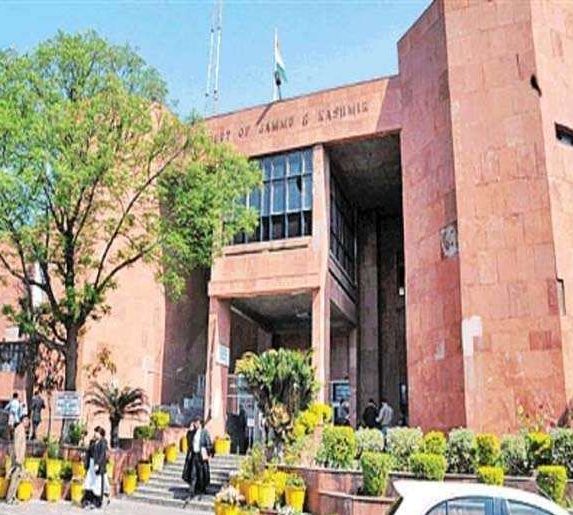
Once Cognizance Is Taken and Summons Issued, Magistrate Lacks Power to Recall Process, Rules Court
Court
Shivaji Rathore 09-01-2026
Legal Question:-
Whether a Magistrate has the power to discharge an accused at the stage of Section 251 of the Code of Criminal Procedure (CrPC) in a summons case, after cognizance has already been taken and summons have been issued.
High Court’s Ruling
The Delhi High Court has held that a Magistrate does not possess the power to discharge an accused at the Section 251 CrPC stage in a summons case once cognizance is taken and process has been issued under Section 204 CrPC. Setting aside the discharge order passed by the Magistrate, the Court clarified that Section 251 CrPC does not permit a “mini-trial” or reconsideration of the summoning order.
Observation of the Court
Justice Amit Mahajan observed:
“A bare reading of the aforesaid provision shows that the provision only contemplates that the particulars of the alleged offence be stated to the accused and does not empower the Magistrate to conduct a mini-trial. The provision of Section 251 of the CrPC neither expressly nor by implication provides the Magistrate with the power to drop proceedings against the accused or to recall summons.”
Understanding Section 251 CrPC:- Section 251 CrPC provides that in a summons case, when the accused appears before the Magistrate: The particulars of the offence shall be stated to him; He shall be asked whether he pleads guilty or has any defence to make;
No formal charge is required to be framed. The High Court clarified that this stage is purely procedural and not adjudicatory in nature.
Facts of the Case:- The respondents, who were ex-directors of the petitioner hospital company, were accused of unlawfully retaining and misappropriating valuable medical equipment and assets belonging to the company after their resignation. The Magistrate had taken cognizance of the complaint and issued summons. However, at the stage of Section 251 CrPC, the Magistrate discharged the accused, relying on the Supreme Court decision in Bhushan Kumar v. State (2012). This discharge order was challenged before the Delhi High Court. Why the Magistrate’s Order Was Set Aside The High Court held that: Summons cases fall under Chapter XX of the CrPC, which does not provide for discharge, unlike warrant cases under Section 239 CrPC. Once process is issued under Section 204 CrPC, the Magistrate cannot recall or review the summoning order. Discharging the accused at the Section 251 stage effectively amounts to recalling summons, which is impermissible in law.
Judgments Relied Upon by the Delhi High Court
1. Subramanium Sethuraman v. State of Maharashtra A three-Judge Bench of the Supreme Court held that: Issuance of process under Section 204 CrPC is an interlocutory order. A Magistrate cannot review or recall the summoning order.
Summons cases do not contemplate a stage of discharge.
2. Adalat Prasad v. Roopal Jindal
The Supreme Court ruled that: There is no power of review available to a Magistrate under the CrPC.
Once summons are issued, the Magistrate becomes functus officio with respect to that order.
3. In Re: Expeditious Trial of Cases under Section 138 NI Act A Constitution Bench reaffirmed that:
Courts cannot read powers into statutes which do not exist. Magistrates have no inherent power to discharge an accused in a summons case.
4. Bhushan Kumar v. State (NCT of Delhi) – Clarified
The High Court held that observations in Bhushan Kumar regarding discharge at Section 251 stage were not the ratio decidendi, but mere passing observations, and cannot override binding judgments of larger benches.
Final Outcome
The revision petition was allowed. The Magistrate’s discharge order was set aside. The matter was remitted back to the Trial Court for continuation of proceedings in accordance with law. The High Court clarified that it did not examine the merits of the allegations, and the order was confined to the limited procedural issue.
Legal Significance of the Judgment:-
This ruling is crucial because it: Reaffirms the procedural distinction between summons cases and warrant cases.Prevents misuse of Section 251 CrPC as a tool for premature termination of proceedings.
Strengthens the principle that criminal process once initiated cannot be undone by judicial review at the same level. Provides clarity to trial courts across the country on the limited scope of Section 251 CrPC.
Case Title: Tulip Multispecialty Hospital Private Limited v. Akhil Saxena & Anr.
Case No.: CRL.REV.P. 245/2023
Decision Date: 05 January 2026