Shivaji Rathore 21 March 2026
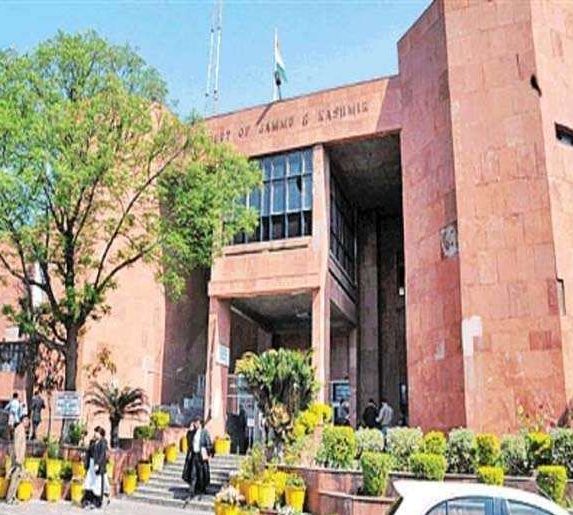
The High Court of Jammu & Kashmir and Ladakh has reiterated the settled position regarding the limited scope of revisional jurisdiction in matters concerning framing of charge or discharge of an accused. The Court emphasized that the powers of the High Court under Section 397 and Section 482 of the Code of Criminal Procedure, or the corresponding provision under Section 528 of the BNSS, are not to be exercised as if the Court were sitting in appeal over the order of the trial court.
It was observed that revisional jurisdiction is essentially supervisory in nature and is meant to correct jurisdictional errors or prevent miscarriage of justice. It does not permit a re-appreciation of evidence or a detailed examination of the factual matrix of the case. The High Court clarified that while an order framing charge is not purely interlocutory and can be interfered with in an appropriate case, such interference is to be exercised with great caution and restraint.
The Court categorically held that the High Court cannot undertake a fresh evaluation of evidence at the stage of revision. Issues relating to credibility of witnesses, inconsistencies in statements, or sufficiency of evidence are matters to be tested during trial and not at the stage of revisional scrutiny. Entertaining such arguments would amount to converting the revisional jurisdiction into an appellate exercise, which is impermissible in law. Reaffirming the governing principle, the Court held that interference with an order of charge or discharge is justified only in the “rarest of rare cases,” where there exists a patent error of jurisdiction or a manifest illegality apparent on the face of the record. The expression “patent error of jurisdiction” signifies a situation where the trial court has acted beyond the scope of its authority or in clear violation of legal principles, resulting in grave injustice.
In the absence of such exceptional circumstances, even if another view is possible on the basis of the material available on record, the High Court must refrain from interfering. The legislative intent behind restricting revisional powers is to ensure that criminal trials are not unnecessarily delayed or obstructed at the threshold stage by repeated challenges to interlocutory orders. The judgment thus reinforces the principle that revisional jurisdiction is not a forum for re-assessing evidence or substituting the High Court’s opinion for that of the trial court. It is a limited and discretionary power, to be invoked sparingly and only to correct glaring legal errors. By drawing this distinction, the Court has preserved the sanctity of the trial process and ensured that factual adjudication remains within the domain of the trial court.
Ase details :- Crl R No. 61/2024, CrlM No. 1908/2024 c/w Crl R No. 65/2024, Bail App. No. 292/2024, CrlM No.
1907/2024, CrlM No. 1960/2024, CrlM No. 2046/2024, CrlM No. 99/2025, Bail App. No. 319/2024, Crl
R No. 1/2025, CrlM No. 2/2025, Bail App. No. 1/2025, Bail App. No. 4/2025, Crl R No. 5/2025, CrlM
No. 34/2025, Crl R. No. 18/2025, CRM(M) No. 418/2025, CrlM No. 831/2025, Crl R No. 2/2025 and
CrlM No. 3/2025
Decided on : 04-11-2025