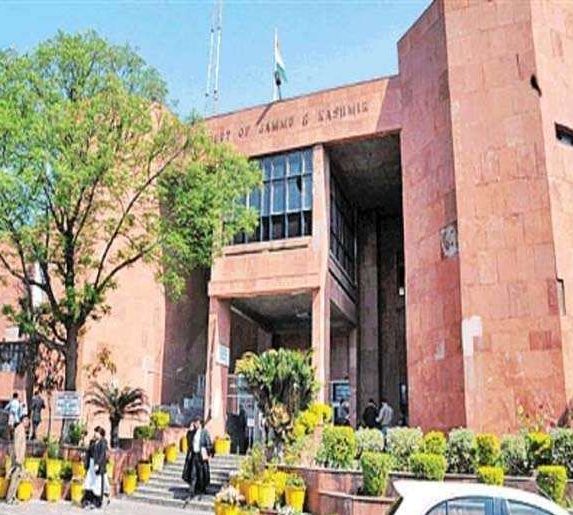
J&K High Court holds that intent and premeditation cannot be ruled out at charge stage based on limited material
Shivaji Rathore 21 March 2026
The High Court of Jammu & Kashmir and Ladakh, has provided significant clarity on the distinction between offences punishable under Section 302 IPC (murder) and Section 304 Part II IPC (culpable homicide not amounting to murder), particularly at the stage of framing of charge.
The Court emphasized that at the threshold stage of framing charges, the trial court is not required to conclusively determine whether the offence falls under Section 302 or Section 304 Part II IPC. Such determination is a matter of trial, to be decided after full appreciation of evidence. At this stage, the court is only required to assess whether the material on record discloses sufficient grounds to presume the commission of a serious offence, including murder.
Rejecting the argument that the presence of a single injury in the post-mortem report necessarily rules out murder, the Court held that reliance solely on medical evidence at this stage is misplaced. A post-mortem report is only advisory in nature and cannot override other primary evidence, including eyewitness accounts and surrounding circumstances. Therefore, the nature of the offence cannot be downgraded merely on the basis of a single injury or selective reading of medical opinion.
The Court further observed that assertions such as the incident arising out of a sudden fight or absence of premeditation are essentially matters of defence, which cannot be conclusively examined at the stage of framing charge. Entertaining such pleas would amount to conducting a mini-trial, which is impermissible in law. The veracity of such defences can only be tested during the course of trial upon evaluation of complete evidence.
In the facts of the case, the Court noted that the material on record, including eyewitness statements and surrounding circumstances, indicated deliberate and repeated acts of violence. The act of inflicting repeated blows, including on vital parts such as the head, even with objects picked up from the spot, was considered sufficient to infer intention or knowledge of causing death. Such overt acts, by their very nature, supported the framing of charge under Section 302 IPC rather than a lesser offence.
The judgment thus reinforces the principle that the distinction between murder and culpable homicide is often a nuanced question dependent on facts and evidence, which cannot be conclusively determined at the initial stage. Where the material discloses circumstances suggesting intention or knowledge sufficient to attract Section 302 IPC, the court is justified in framing a charge for murder, leaving the final determination to be made after trial.
By cautioning against premature evaluation of defences and over-reliance on isolated pieces of evidence, the High Court has reaffirmed that the stage of framing charge is concerned with the existence of a prima facie case, not with a definitive classification of the offence.
Case Details :- Crl R No. 61/2024, CrlM No. 1908/2024 c/w Crl R No. 65/2024, Bail App. No. 292/2024, CrlM No.
1907/2024, CrlM No. 1960/2024, CrlM No. 2046/2024, CrlM No. 99/2025, Bail App. No. 319/2024, Crl
R No. 1/2025, CrlM No. 2/2025, Bail App. No. 1/2025, Bail App. No. 4/2025, Crl R No. 5/2025, CrlM
No. 34/2025, Crl R. No. 18/2025, CRM(M) No. 418/2025, CrlM No. 831/2025, Crl R No. 2/2025 and
CrlM No. 3/2025
Decided on : 04-11-2025