Shivaji Rathore 20-Dec-2025
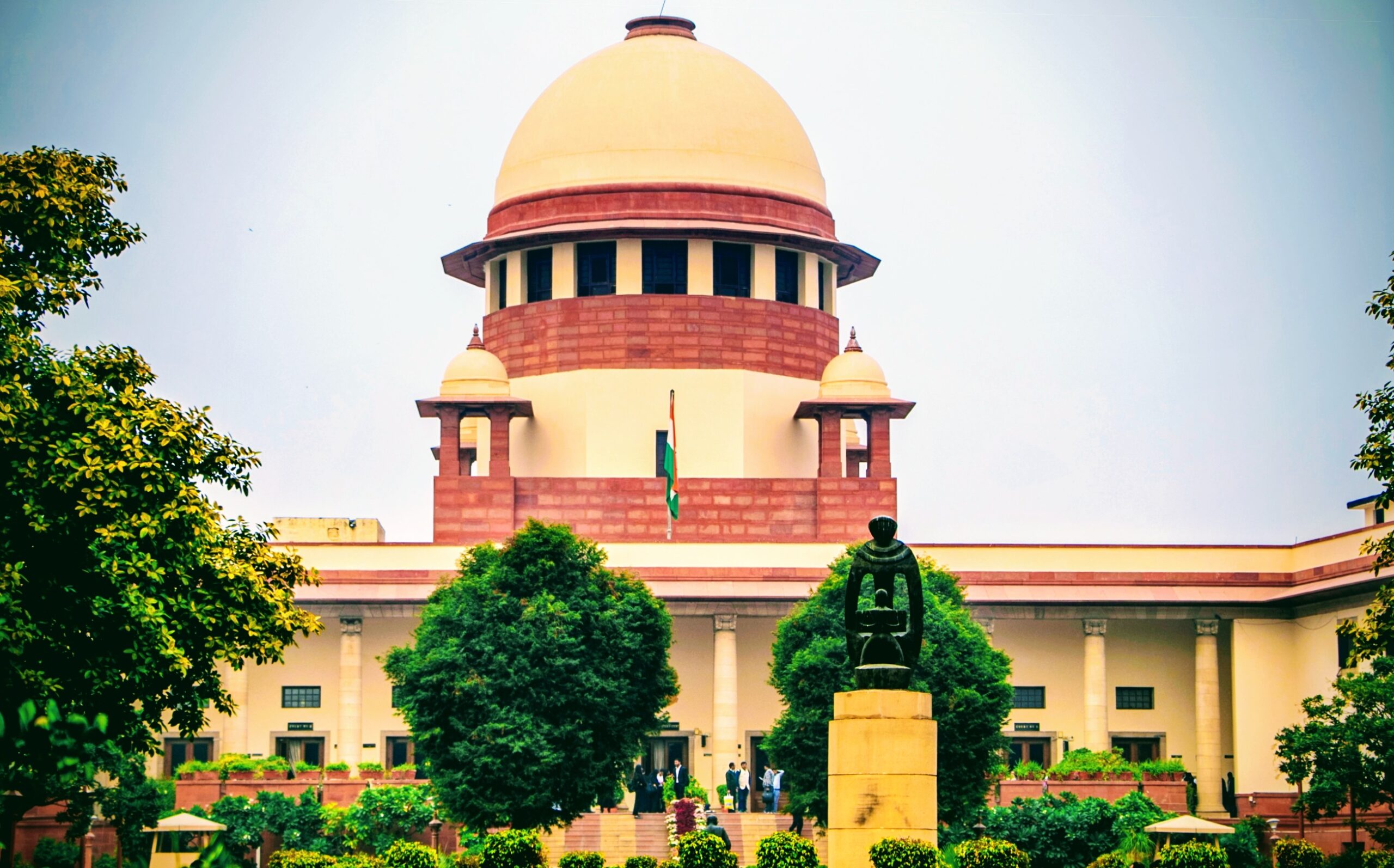
In a significant ruling delineating the contours of sentencing jurisdiction under criminal law, the Supreme Court has categorically held that Sessions Courts do not possess the power to impose life imprisonment for the remainder of a convict’s natural life without remission. Such an extraordinary sentencing power, the Court clarified, is exclusively vested in Constitutional Courts, namely the Supreme Court and the High Courts. A Bench comprising Justice Ahsanuddin Amanullah and Justice K. Vinod Chandran, while partly allowing the appeal of the convict, modified the sentence imposed by the trial court, holding that the direction of “life imprisonment till natural death without remission” was legally unsustainable.
“The power to impose punishment of imprisonment for life without remission was conferred only on the Constitutional Courts and not on the Sessions Courts.”
Background of the Case
The case arose from a brutal and deeply disturbing crime. The accused, a relative by marriage, entered the hut of a widow a mother of five who had repeatedly resisted his sexual advances. Upon being rejected once again, the accused poured kerosene on her and set her ablaze. The victim sustained 60% burn injuries and succumbed to her injuries ten days later. The conviction of the accused was primarily founded upon two consistent dying declarations:- One recorded by a police officer, and Another recorded by a Magistrate in the presence of a medical doctor.
Both declarations unequivocally named the accused and clearly spelt out the motive behind the crime.
Sentencing by the Trial Court and Affirmation by the High Court While convicting the accused under Section 302 of the Indian Penal Code, 1860, the Sessions Court imposed:- Life imprisonment till the end of natural life, and A further direction that the accused shall not be granted the benefit of remission, including under Section 428 of the Code of Criminal Procedure, 1973. The Karnataka High Court affirmed this sentencing order, prompting the convict to approach the Supreme Court. Core Legal Issue Before the Supreme Court The central question before the Court was:- Whether a Sessions Court is empowered to impose a sentence of life imprisonment extending till the convict’s natural life and simultaneously deny the statutory and constitutional right of remission. Life Imprisonment, Remission, and the Role of Constitutional Courts Authoring the judgment, Justice K. Vinod Chandran underscored a fundamental principle of sentencing jurisprudence:
“The sentence of life imprisonment no doubt means the entire life, subject only to the remission and commutation provided under the Cr.PC and also to Articles 72 and 161 of the Constitution of India, which cannot be curtailed by a Sessions Court.”
The Court emphasised that:
A Sessions Court is a creation of the CrPC, and
It cannot override or curtail statutory provisions such as Sections 432 to 435 or Section 428 of the CrPC, nor can it trench upon constitutional powers of remission and commutation vested in the Executive under Articles 72 and 161. Swamy Shraddananda and the “Middle Ground” Sentencing Doctrine
The Bench acknowledged the landmark decision in Swamy Shraddananda (2) v. State of Karnataka, (2008) 13 SCC 767, where the Supreme Court evolved a “middle ground” sentencing option for heinous crimes that do not fall within the “rarest of rare” category warranting death penalty.
Under this doctrine:- The Supreme Court or High Courts may direct that a life sentence be served for a fixed minimum term (20, 25, 30 years) or
Even for the entire natural life of the convict without remission. This principle was later affirmed by a Constitution Bench in Union of India v. V. Sriharan alias Murugan & Ors., (2016) 7 SCC 1. Crucial Clarification: Sessions Courts Cannot Apply the Middle Ground However, the Supreme Court in the present case made a critical clarification:
“The power of alternate sentencing to cover the hiatus between 14 years and death, cannot be applied by the Sessions Courts.”
The Court held that while life imprisonment ordinarily means imprisonment for the remainder of life, the authority to restrict remission or prescribe incarceration beyond the conventional remission framework lies only with Constitutional Courts.
Any such direction by a Sessions Court would be:- In direct conflict with the CrPC, and An impermissible encroachment upon the executive’s powers of remission and commutation.
Final Outcome:- Accordingly, the Supreme Court:
Set aside the sentencing direction of “till natural death” and “no remission”, Modified the sentence to a standard “imprisonment for life”, and
Clarified that the accused remains entitled to be considered for remission or commutation by the competent government authority in accordance with law and policy. The conviction under Section 302 IPC was affirmed, but the sentencing order was partly interfered with.
Significance of the Ruling
This judgment reinforces a vital constitutional balance by:- Reaffirming the separation of powers between trial courts, constitutional courts, and the executive,
Preventing sentencing overreach by Sessions Courts, and Ensuring that statutory and constitutional rights of remission are not judicially extinguished except by courts constitutionally empowered to do so.
The ruling serves as an important reminder that even in cases involving heinous crimes, sentencing must remain within the bounds of jurisdictional authority and statutory framework.
Case Details
Cause Title: Kiran v. State of Karnataka
- How to Defreeze Bank Accounts Frozen by Cyber Cell or Police: Landmark Judgments & Legal Remedies
 Shivaji Rathore 23 March 2026 Freezing of bank accounts by Cyber Cells and Police Authorities has become a
 - Section 302 vs Section 304 IPC: Distinction at the Stage of Framing Charge
 J&K High Court holds that intent and premeditation cannot be ruled out at charge stage based on limited
 - Criminal Conspiracy under IPC: Meeting of Minds and Legal ThresholdNot Just Agreement, But Intent: The Law on Criminal Conspiracy Shivaji Rathore 21 March 2026 The High Court
- Revisional Jurisdiction of High Court in Charge/Discharge Orders: A Narrow and Exceptional Power
 Shivaji Rathore 21 March 2026 The High Court of Jammu & Kashmir and Ladakh has reiterated the settled
 - Framing of Charge vs Discharge: Limits of Judicial Scrutiny at the Threshold StageHigh Court Reiterates: No Mini-Trial at the Stage of Framing Charges Shivaji Rathore 21 March 2026 The High