Shivaji Rathore 19-12-2025
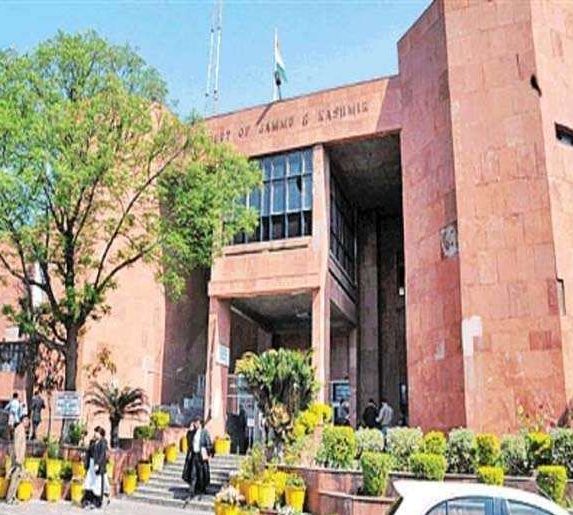
Reiterating a fundamental principle governing writ jurisdiction, the Jammu & Kashmir and Ladakh High Court has held that a litigant who suppresses or withholds material facts while approaching the Court disentitles himself from being heard on merits and cannot claim any equitable or discretionary relief under Article 226 of the Constitution. The Court observed that abuse of the judicial process by concealment of relevant facts strikes at the very foundation of justice delivery and cannot be tolerated, irrespective of the nature of relief claimed.
Case Before the Court:- The observations were made by a Single Judge Bench of Justice Wasim Sadiq Nargal while dismissing two connected writ petitions filed by occupants of Nazool land at Sheikh Bagh, Srinagar.
The petitioners sought:- Conferment of proprietary rights over the Nazool land; and Quashing of eviction proceedings initiated against them under the J&K Public Premises (Eviction of Unauthorized Occupants) Act, 1988.
Suppression of Material Facts: Court’s Stern Observations:- The Court found that the petitioners had deliberately and consciously suppressed material facts, particularly the fact that:- They had earlier filed OWP No. 2336/2018 and OWP No. 383/2019; Both petitions were withdrawn immediately after the respondents filed their replies; This crucial information was intentionally concealed in the present proceedings. Taking serious exception to this conduct, the Court observed:
“Such conduct is not a mere omission but a calculated attempt to mislead this Court and to get interim relief by deception. A litigant who attempts to secure orders of the Court by suppressing material facts forfeits all right to be heard, let alone to seek equitable or discretionary relief under Article 226.”
The Court held that the writ jurisdiction cannot be invoked by a litigant with unclean hands, and judicial process cannot be allowed to be abused in such a “brazen manner.”
Claim for Proprietary Rights Under 1981 Government Order Rejected:- The petitioners sought parity with leaseholders who were granted ownership rights under Government Order No. Rev/NDK/248 of 1981, arguing that similarly situated persons had been extended benefits at concessional rates. Rejecting this contention, the Court held that: – The benefit of the 1981 Government Order was confined strictly to those who were lessees on the date of issuance of the order;- The petitioners’ lease had expired in 1974 and was renewed only in 1982, thereby placing them outside the scope of the said order. Accordingly, the plea of discrimination under Article 14 was found to be misconceived.
Roshni Act Regularisation Held Legally Non-Existent, The Court further noted that in 2005, the petitioners had themselves applied under the J&K State Lands (Vesting of Ownership Rights) Act, 2001 (Roshni Act), pursuant to which only a portion of the land was regularised in their favour at a higher rate.
However, the Court emphasized that:- The Roshni Act has been declared void ab initio by a Division Bench in Prof. S.K. Bhalla v. State of J&K; Consequently, any proprietary rights claimed on the basis of regularisation under the Roshni Act were legally non-existent. Having voluntarily opted for a distinct statutory regime, the petitioners could not later seek parity with beneficiaries of the 1981 Government Order.
Eviction Proceedings Upheld On the issue of eviction, the Court held that: The lease had expired in 2014 and was not renewed thereafter; Upon expiry of the lease, the petitioners became unauthorized occupants; The eviction notice issued under Section 4(1) of the Public Premises Act by the Assistant Commissioner Nazool was within statutory competence and suffered from no illegality. The challenge to eviction proceedings was accordingly rejected.
Reliance on Supreme Court Precedents
The Court relied upon authoritative judgments of the Supreme Court, including:
K.D. Sharma v. SAIL
Dalip Singh v. State of U.P.
Reiterating that equitable jurisdiction demands utmost candour, the Court held that a litigant who approaches the writ court by concealing facts or misleading the Court forfeits the right to any discretionary relief.
No Costs, But a Strong Warning While terming the case fit for exemplary and deterrent costs, the Court refrained from imposing the same, considering the advanced age of the petitioners. However, a stern warning was issued against abuse of the judicial process.
Conclusion:- This judgment serves as a strong reminder that Article 226 is an equitable jurisdiction, and truthfulness and transparency are non-negotiable prerequisites for invoking it. Suppression of material facts not only weakens a litigant’s case but also invites outright dismissal, regardless of the merits. The ruling reinforces the settled principle that courts will not assist those who seek to secure relief through deception, thereby preserving the sanctity of the judicial process.