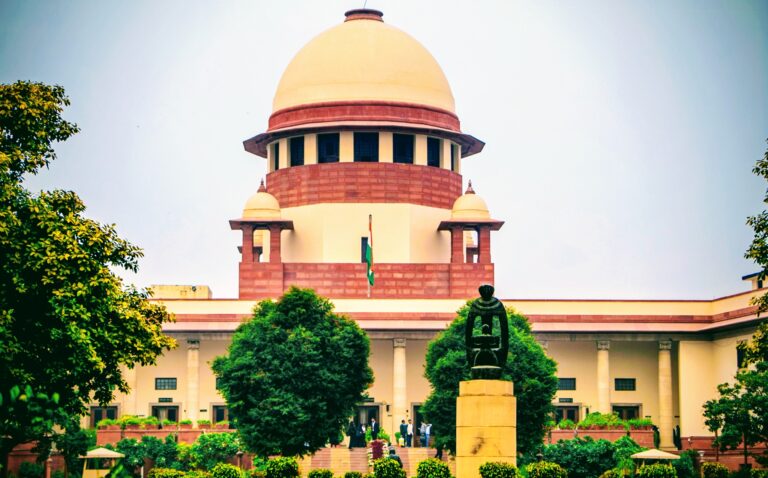
In a significant ruling concerning the scope of writ jurisdiction under Article 226 of the Constitution, the Supreme Court has held that District Milk Unions in Rajasthan are independent co-operative societies and cannot be treated as “State” or its instrumentalities under Article 12.
The judgment was delivered by a Bench comprising Justices B.V. Nagarathna and R. Mahadevan, in the case of Ram Chandra Choudhary & Ors v. Roop Nagar Dugdh Utpadak Sahakari Samiti Ltd. & Ors (Civil Appeal No. 4352 of 2026).
The Court categorically observed that District Milk Unions are autonomous, member-driven institutions, governed by the Rajasthan Co-operative Societies Act, 2001, along with the Rules and their own bye-laws. They are neither owned nor financially or administratively controlled by the State in a manner that would bring them within the ambit of Article 12.
Importantly, the Court clarified that mere statutory regulation or supervision by authorities such as the Registrar or the State Co-operative Election Authority does not alter the independent character of such societies.
The dispute in the present case arose out of elections to the Management Committees (Boards of Directors) of various District Milk Unions in Rajasthan. Certain representatives of primary societies challenged specific bye-laws prescribing eligibility criteria for contesting elections. The Rajasthan High Court, both at the Single Judge and Division Bench levels, had struck down these bye-laws as ultra vires.
However, the Supreme Court found fault with the High Court’s approach. It held that writ jurisdiction under Article 226 cannot be invoked in matters concerning internal governance, management, or electoral disputes of co-operative societies, unless there is a clear breach of statutory or public duty of a public law character.
The Court emphasized that:
Disputes relating purely to internal management and electoral processes of co-operative societies do not automatically attract writ jurisdiction merely because such societies are governed by a statute.
Further, the Court underscored the importance of exhausting statutory remedies. It noted that the Rajasthan Co-operative Societies Act, 2001 provides a comprehensive dispute resolution mechanism under Sections 58, 104, and 105, specifically covering election-related disputes.
By entertaining the writ petitions, the High Court had effectively bypassed this statutory framework, rendering it redundant an approach the Supreme Court strongly disapproved.
The judgment also reiterates an important legal principle:
Even if a body is not “State” under Article 12, it may still be amenable to writ jurisdiction only when it performs public functions or discharges public duties of a significant nature. However, internal disputes of co-operative societies remain within the private law domain.
In reaching its conclusion, the Court relied on several landmark precedents, including Ajay Hasia v. Khalid Mujib Sehravardi, Thalappalam Service Co-operative Bank Ltd. v. State of Kerala, and Federal Bank Ltd. v. Sagar Thomas.