Landmark Directions to Enforce Section 269ST of the Income Tax Act
Shivaji Rathore 02-01-2026
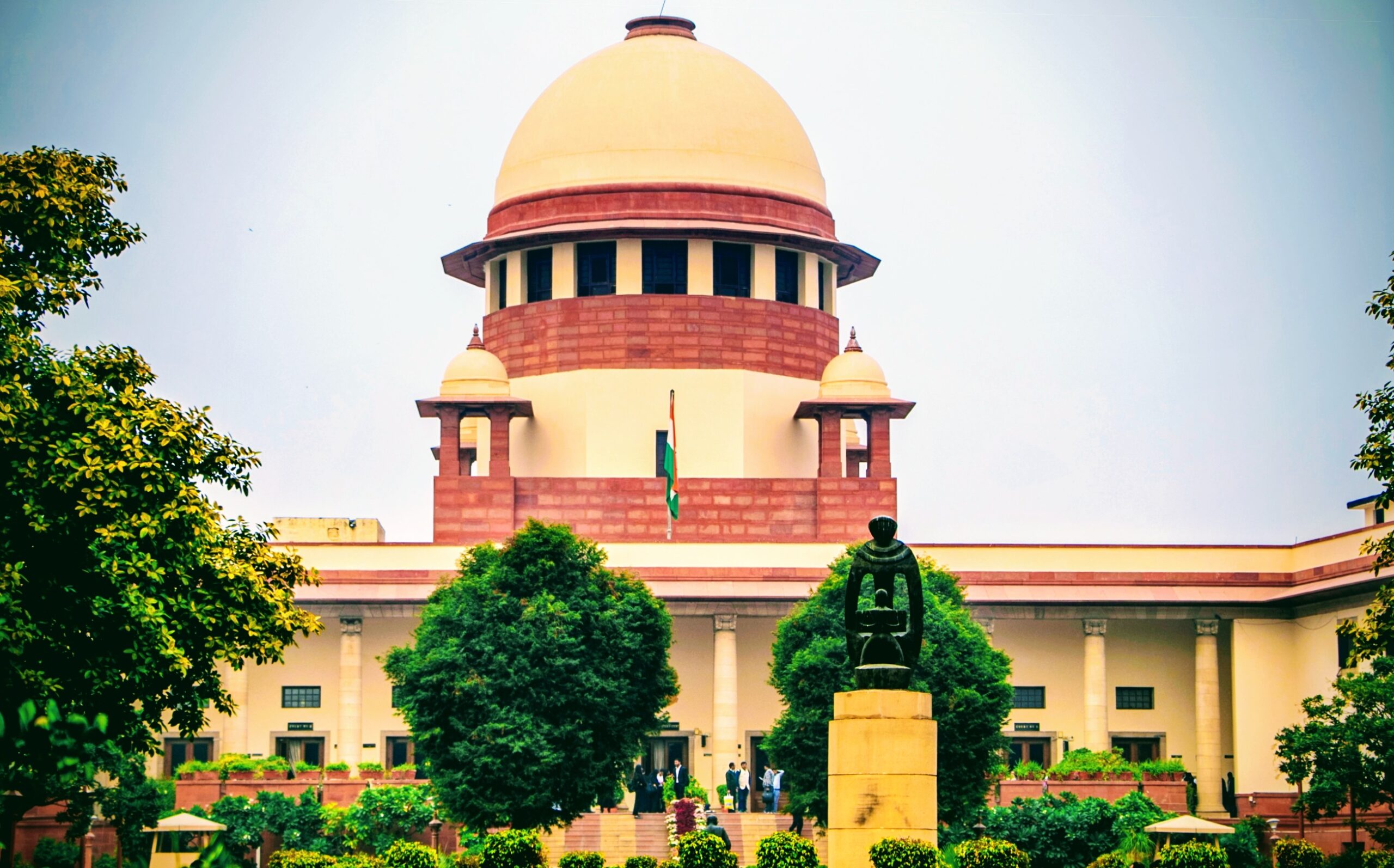
In a significant ruling aimed at strengthening the fight against black money and tax evasion, the Supreme Court of India on April 16 issued binding directions to courts and registration authorities across the country to mandatorily report cash transactions exceeding ₹2 lakh to the Income Tax Department. The judgment seeks to ensure strict enforcement of Section 269ST of the Income Tax Act, 1961, which prohibits high-value cash transactions beyond the prescribed threshold and mandates penal consequences for violations.
Mandatory Intimation by Courts in Civil Suits
The Supreme Court held that whenever a civil suit is filed claiming payment of ₹2,00,000 or more in cash towards any transaction, it becomes obligatory for the court concerned to intimate the jurisdictional Income Tax Department. The purpose of such intimation is to enable the tax authorities to verify whether the transaction violates Section 269ST of the Income Tax Act and to take action in accordance with law.
The Court clarified that mere pendency of civil proceedings cannot shield parties from scrutiny under tax laws. Binding Duties Cast Upon Sub-Registrars
Extending the obligation beyond courts, the Supreme Court also issued categorical directions to registration authorities, particularly Sub-Registrars.
It ruled that whenever any document presented for registration such as a sale deed or agreement to sell records a cash consideration of ₹2 lakh or more, the Sub-Registrar must immediately report the transaction to the Income Tax Department. This direction is especially relevant in the context of real estate transactions, where unreported cash dealings are frequently alleged.
Disciplinary Action for Non-Compliance by Officials:- In a strong warning to erring authorities, the Court held that failure to report such transactions will invite disciplinary proceedings. Where an Income Tax Authority comes to know of a violation involving immovable property and finds that the Sub-Registrar failed to report the transaction, the matter must be brought to the notice of the Chief Secretary of the concerned State or Union Territory for initiating appropriate disciplinary action against the defaulting officer.
Supreme Court’s Operative Directions:- The Court summarised its directions as follows:
(A) Courts must inform the Income Tax Department whenever a suit claims cash payment of ₹2 lakh or more
(B) Income Tax Authorities shall act upon such information by following due process of law
(C) Sub-Registrars must report documents reflecting cash consideration of ₹2 lakh or above
(D) Failure by registering authorities shall be reported to the Chief Secretary for disciplinary action
The Registrar (Judicial) of the Supreme Court was further directed to circulate the judgment to all High Courts, State/UT Chief Secretaries, and the Principal Chief Commissioner of Income Tax to ensure nationwide compliance.
Purpose and Scope of Section 269ST Explained
The Court revisited the legislative intent behind Section 269ST, introduced by the Finance Act, 2017, which prohibits receipt of ₹2,00,000 or more in cash:
in a single transaction, from a person in a single day, or for transactions relating to one event or occasion.
Violation attracts a penalty equal to the amount received under Section 271DA of the Act.
The Court reiterated that permissible modes of payment include account-payee cheque, bank draft, or electronic modes such as NEFT, RTGS, or UPI. Only transactions involving government bodies, banks, post offices, and cooperative banks are exempted.
Court Observes Failure of Law Enforcement
Despite being in force since April 1, 2017, the Court observed that Section 269ST has failed to bring the desired change, primarily due to lack of enforcement.
Emphasising that ignorance of law is not an excuse, the Court held that statutory mandates must be enforced rigorously, failing which judicial intervention becomes inevitable.
Background of the Case:- The Bench comprising Justice J.B. Pardiwala and Justice R. Mahadevan was dealing with a property dispute involving a charitable educational trust and private individuals in Bengaluru.
The Trust, in possession of the property since 1929 for educational and sports purposes, challenged a suit for permanent injunction filed by private respondents who claimed rights under a 2018 agreement to sell.
The respondents asserted that they had paid ₹75 lakh in cash as advance consideration an assertion that triggered scrutiny under Section 269ST.
Findings and Final Decision:- Allowing the appeal, the Supreme Court held that it was legally untenable for the respondents to seek injunction against the Trust instead of proceeding against the alleged vendors to whom they had paid a huge unreported cash amount.
Justice Mahadevan, authoring the judgment, observed that while Section 269ST primarily targets the recipient, there is also an obligation on the payer to disclose the source of such substantial cash.
Terming the suit as speculative and legally defective, the Court held that continuing such litigation would amount to judicial waste of time and accordingly rejected the suit.
Case Details
Case Title: The Correspondence RBANMS Educational Institution v. B. Gunashekar & Another
Court: Supreme Court of India
Bench: Justice J.B. Pardiwala & Justice R. Mahadevan
Date of Judgment: 16 April 2025
Case no:- Civil Appeal No. 5200 of 2025 Arising of SLP C No. 13679 of 2022