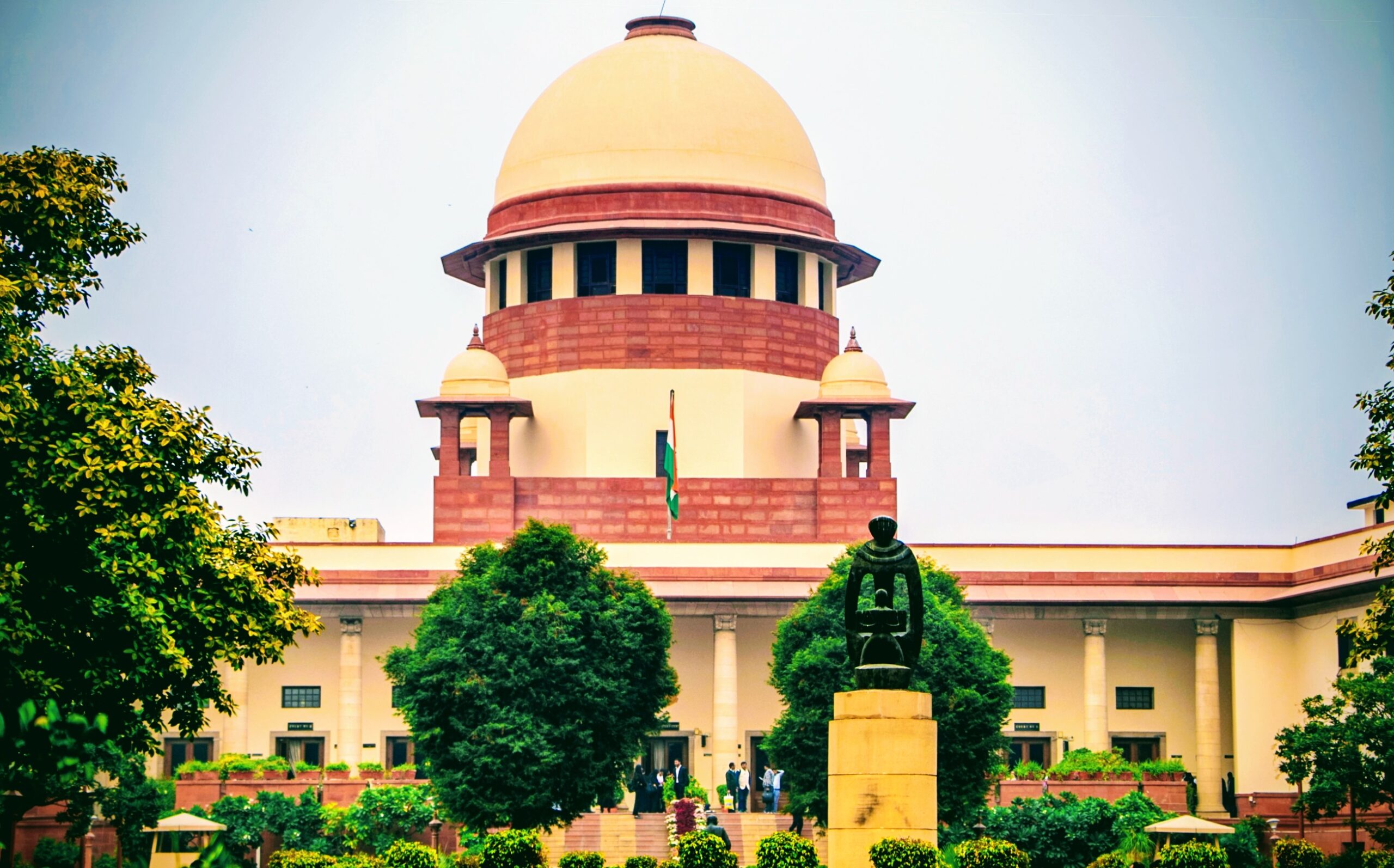
Synopsis required for every 138 case filing, Landmark Judgment
Shivaji Rathore 12 -Dec-2025
In a landmark ruling aimed at speeding up cheque bounce litigation, the Supreme Court has issued a comprehensive set of directions governing the procedure, trial, settlement, and compounding of Section 138 NI Act cases. These directions significantly modify earlier judicial positions (including overruling Nalinakshan vs. M. Rameshan, 2009 All MR (Cri) Journal 273) and introduce new procedural reforms applicable across India. These guidelines will now bind all Magistrates and District Courts handling cheque dishonour matters.
1. Mandatory Affidavit of Service – False Affidavit Actionable
The Court held that every complainant must file an affidavit of service. If the affidavit is false, the Trial Court is empowered to initiate appropriate legal action against the complainant.
In all cases filed under Section 138 of the NI Act, service of summons shall not be confined through prescribed usual modes but shall also be issued dasti i.e. summons shall be served upon the accused by the complainant in addition. This direction is necessary as a large number of
Section 138 cases under the NI Act are filed in the metropolitan cities by financial institutions, by virtue of Section 142(2) of the NI Act, against
accused who may not be necessarily residing within the territorial jurisdiction of the Court where the complaint has been filed. The Trial Courts shall further resort to service of summons by electronic means in terms of the applicable Notifications/Rules, if any, framed under sub- Sections 1 and 2 of Section 64 and under Clause (i) of Section 530 and other provisions of the Bhartiya Nagarik Suraksha Sanhita, 2023 (for short ‘BNSS, 2023’) like Delhi BNSS (Service of Summons and Warrants) Rules, 2025. For this purpose, the complainant shall, at the time of filing the complaint, provide the requisite particulars including e-mail address,
mobile number and/or WhatsApp number/messaging application details of the accused, duly supported by an affidavit verifying that the said
particulars pertain to the accused/respondent. The complainant shall file an affidavit of service before the Court. In the event such affidavit is found to be false, the Court shall be at liberty to take appropriate action against the complainant in accordance with law.
2. UPI / QR-Based Digital Payment System for Settlement at Summons Stage:- A major reform is the creation of dedicated digital payment gateways in every district: District Judges must operationalise secured QR codes / UPI links. Summons must clearly inform the accused that they may instantly pay the cheque amount through the online link. Upon confirmation of payment, courts may proceed with compounding / closure under Section 147 NI Act or Section 255 CrPC / 278 BNSS. This ensures settlement at the very first stage and reduces pendency drastically.
In order to facilitate expeditious settlement of cases under Section 138 of the NI Act, the Principal District and Sessions Judge of each District
Court shall create and operationalise dedicated online payment facilities through secure QR codes or UPI links. The summons shall expressly
mention that the Respondent/Accused has the option to make payment of the cheque amount at the initial stage itself, directly through the said online link. The complainant shall also be informed of such payment and upon confirmation of receipt, appropriate orders regarding release of such money and compounding/closure of proceedings under Section 147 of the NI Act
and/or Section 255 of Cr.P.C./278 BNSS, 2023 may be passed by the Court in accordance with law. This measure shall promote settlement at the
threshold stage and/or ensure speedy disposal of cases.
3. Mandatory Synopsis in Every 138 Complaint – New Supreme Court Format Every Section 138 complaint must now begin with a Synopsis, placed immediately after the index, containing the following particulars:
SYNOPSIS FORMAT (MANDATORY)
Complaint under Section 138 of the Negotiable Instruments Act, 1881
I. Particulars of Parties
(i) Complainant: ______
(ii) Accused: ______
(If company/firm: Registered Address, MD/Partner, signatory, persons vicariously liable)
II. Cheque Details
Cheque No.: ______
Date: ______
Amount: ______
Bank & Branch: ______
Account No.: ______
III. Dishonour Details
Date of Presentation: ______
Date of Return: ______
Branch of Dishonour: ______
Reason for Dishonour: ______
IV. Statutory Notice
Date of Notice: ______
Mode of Service: ______
Date of Dispatch & Tracking No.: ______
Proof of Delivery: ______
Whether served: Yes/No
Reply, if any: ______
V. Cause of Action
Date of accrual: ______
Jurisdiction under Section 142(2): ______
Any other pending 138 complaints between same parties: ______
VI. Relief Sought
Summoning & Trial under Section 138 NI Act
Interim Compensation under Section 143A – Yes/No
VII. Filed Through:
Complainant / Authorized Representative
4. No Need to Issue Summons Before Cognizance Under BNSS
The Supreme Court approved the Karnataka High Court ruling in Ashok v. Fayaz Ahmad (2025): Since the NI Act is a special law, Magistrates need not issue summons under Section 223 BNSS before taking cognizance. Direct cognizance can be taken upon filing of the complaint. This eliminates unnecessary procedural delay.
Recently, the High Court of Karnataka in Ashok Vs. Fayaz Aahmad, 2025 SCC OnLine Kar 490 has taken the view that since NI Act is a special
enactment, there is no need for the Magistrate to issue summons to the accused before taking cognizance (under Section 223 of BNSS) of
complaints filed under Section 138 of NI Act. This Court is in agreement the view taken by the High Court of Karnataka. Consequently, this Court directs that there shall be no requirement to issue summons to the accused in terms of Section 223 of BNSS i.e., at the pre-cognizance stage.
5. Mandatory Questions at First Appearance (Post Cognizance Stage) Trial Courts must put the following questions (per Rajesh Aggarwal vs State, Delhi HC):
1. Do you admit the cheque belongs to your account?
2. Do you admit your signature?
3. Did you issue/deliver the cheque?
4. Do you admit liability?
5. If liability denied, specify defence:
Security cheque
Loan repaid
Cheque altered/misused
Other (specify)
6. Do you want to compound the case at this stage?
Responses must be recorded on the order sheet.
The Court shall record the responses to the questions in the order- sheet in the presence of the accused and his/her counsel and thereafter
determine whether the case is fit to be tried summarily under Chapter XXI of the Cr.P.C. / Chapter XXII of the BNSS, 2023
6. Summary Trial is the Rule – Conversion Requires Cogent Reasons:- Courts must follow summary trial procedure under Section 143 NI Act. A summary trial can be converted to summons trial only with detailed reasons recorded by the Magistrate.
Wherever, the Trial Court deems it appropriate, it shall use its power to order payment of interim deposit as early as possible under Section 143A
of the NI Act.
7. Interim Compensation (Section 143A) – Use as Early as Possible:- Trial Courts should proactively order interim deposit at the earliest stage to deter delay tactics by accused persons.
8. Physical Courts Preferred After Service of Summons:- After the accused is served, cases must be heard in physical courtrooms. Digital listing is allowed only before service. Exemptions from appearance must be given sparingly.
Since physical courtrooms create a conducive environment for direct and informal interactions encouraging early resolution, the High Courts
shall ensure that after service of summons, the matters are placed before the physical Courts. Exemptions from personal appearances should be
granted only when facts so warrant. It is clarified that prior to the service of summons the matters may be listed before the digital Courts.
9. Evening Courts for 138 Cases – Pecuniary Limits to Be Raised The SC held that existing limits (e.g., Rs. 25,000 in Delhi) are too low and must be revised upward to ensure meaningful disposal of cases.
Wherever cases under Section 138 of the NI Act are permitted to be heard and disposed of by evening courts, the High Courts should ensure that pecuniary limit of the cheque amount is realistic. For instance, in Delhi, the jurisdiction of the evening courts to hear and decide cases of
cheque amount is not exceeding Rs.25,000/-. In the opinion of this Court, the said limit is too low. The High Courts should forthwith issue practice
directions and set up realistic pecuniary benchmarks for evening Courts.
10. Dashboard Monitoring System in Delhi, Mumbai & Calcutta:- District Judges must maintain a live dashboard showing:
Total pendency
Monthly disposal
Percentage of settlement/compounding
Average adjournments
Stage-wise breakup
Quarterly reports must be submitted to respective High Courts.
Each District and Sessions Judge in Delhi, Mumbai and Calcuttashall maintain a dedicated dashboard reflecting the pendency and progress of cases under Section 138 of the NI Act. The dashboard shall include, inter alia, details regarding total pendency, monthly disposal rates, percentage of
cases settled/compounded, average number of adjournments per case and the stage-wise breakup of pending matters. The District and Sessions
Judges in aforesaid jurisdictions shall conduct monthly reviews of the functioning of Magistrates handling NI Act matters. A consolidated quarterly report shall be forwarded to the High Court
11. High Court Committees for Monitoring Pendency:- Chief Justices of Delhi, Bombay and Calcutta must constitute committees to:
Monitor pendency
Promote mediation
Conduct Lok Adalats
Ensure strict implementation of these directions
Meetings must occur monthly.
12. Compounding Guidelines – Supreme Court Revises Damodar Prabhu Scheme:- The Court has officially modified the 2010 compounding scheme in view of lower interest rates and high pendency.
Revised Compounding Costs (New Law)
Stage Cost
Before recording defence evidence 0%
After defence evidence but before judgment 5%
Before Sessions Court or High Court 7.5%
Before Supreme Court 10%
13. Magistrate Empowered to Suggest Guilty Plea with Benefits:- If complainant/financial institution demands settlement beyond cheque amount, the Magistrate may: Suggest the accused to plead guilty, and Grant benefit under Section 255(2)/(3) CrPC, Section 278 BNSS, or Probation of Offenders Act, 1958.
It is pertinent to mention that this Court framed guidelines for co
mpounding offences under the NI Act nearly fifteen years back in Damodar S. Prabhu (supra). The relevant portion of the said Judgment is reproduced hereinbelow:-
“THE GUIDELINES
(i) In the circumstances, it is proposed as follows:
(a) That directions can be given that the writ of summons be suitably modified making it clear to the accused that he could make an application for compounding of the offences at the first or second hearing of the case and that if such an application is made, compounding may be allowed by the court without imposing any costs on the accused.
(b) If the accused does not make an application for
compounding as aforesaid, then if an application for compounding is made before the Magistrate at a subsequent stage, compounding can be allowed subject to the condition that the accused will be required to pay 10% of the cheque amount to
be deposited as a condition for compounding with the Legal Services Authority, or such authority as the court deems fit.
(c) Similarly, if the application for compounding is made before the Sessions Court or a High Court in revision or appeal, such compounding may be allowed on the condition that the accused pays 15% of the cheque amount by way of costs.
(d) Finally, if the application for compounding is made before the Supreme Court, the figure would increase to 20% of the cheque amount.
24. We are also conscious of the view that the judicial endorsement of the abovequoted Guidelines could be seen as an act of judicial law-making and therefore an intrusion into the
legislative domain. It must be kept in mind that Section 147 of the Act does not carry any guidance on how to proceed with the compounding of offences under the Act. We have already explained that the scheme contemplated under Section 320 CrPC cannot be followed in the strict sense. In view of the legislative vacuum, we see no hurdle to the endorsement of some suggestions which have been designed to discourage litigants from unduly
delaying the composition of the offence in cases involving Section 138 of the Act.
25. The graded scheme for imposing costs is a means to encourage compounding at an early stage of litigation. In the status quo, valuable time of the court is spent on the trial of these
cases and the parties are not liable to pay any court fee since the proceedings are governed by the Code of Criminal Procedure, even though the impact of the offence is largely confined to the
private parties. Even though the imposition of costs by the competent court is a matter of discretion, the scale of costs has been suggested in the interest of uniformity. The competent court
can of course reduce the costs with regard to the specific facts and circumstances of a case, while recording reasons in writing for such variance. Bona fide litigants should of course contest the proceedings to their logical end.
26. Even in the past, this Court has used its power to do complete justice under Article 142 of the Constitution to frame guidelines in relation to the subject-matter where there was a legislative
vacuum.”
Conclusion
The Supreme Court has now created a robust, technologically enabled, and time-bound mechanism ensuring that: 138 cases are disposed of quickly,
settlements occur at the earliest stage, procedural delays are eliminated, and compounding becomes easier and uniform nationwide.
Case details
CRIMINAL APPEAL NO. 1755 OF 2010
SANJABIJ TARI .…. APPELLANT
VERSUS
KISHORE S. BORCAR & ANR. ..…RESPONDENTS
- Minority Cannot Substitute Proof of Occurrence in Rape Cases: J&K and Ladakh High Court
Shivaji Rathore 14-Dec-2025 Jammu, The High Court of Jammu & Kashmir and Ladakh has ruled that where the prosecution fails to prove the very occurrence of the alleged crime through clear, cogent and uncontradictory evidence, the minority of the alleged victim cannot be invoked as a fallback to sustain conviction. While reiterating the settled legal position that consent of a minor is legally irrelevant in rape prosecutions, the Court clarified that such a principle becomes applicable only after the prosecution first establishes that the alleged sexual offence actually occurred. Justice Mohammad Yousuf Wani made these significant observations while allowing a… Read more: Minority Cannot Substitute Proof of Occurrence in Rape Cases: J&K and Ladakh High Court - Compassionate Appointment Cannot Become a Claim for Higher Post: Supreme Court
Shivaji Rathore 13-Dec-2025 The Supreme Court on Friday (December 12) held that a person who has accepted a compassionate appointment cannot subsequently seek elevation by claiming that he ought to have been appointed to a higher post at the initial stage.The Court reiterated that compassionate appointment is an exception to the normal recruitment process, carved out only to provide immediate financial relief to the family of a deceased employee. Once an applicant accepts the post offered under the applicable compassionate appointment scheme, the appointment attains finality and the appointee is bound by the terms of the scheme. A Bench comprising… Read more: Compassionate Appointment Cannot Become a Claim for Higher Post: Supreme Court - Supreme Court Issues Exhaustive Guidelines to Streamline 138 NI Act Cases: Mandatory Synopsis, Online Payment, No Pre – Cognizance Summons & More
Synopsis required for every 138 case filing, Landmark Judgment Shivaji Rathore 12 -Dec-2025 In a landmark ruling aimed at speeding up cheque bounce litigation, the Supreme Court has issued a comprehensive set of directions governing the procedure, trial, settlement, and compounding of Section 138 NI Act cases. These directions significantly modify earlier judicial positions (including overruling Nalinakshan vs. M. Rameshan, 2009 All MR (Cri) Journal 273) and introduce new procedural reforms applicable across India. These guidelines will now bind all Magistrates and District Courts handling cheque dishonour matters. 1. Mandatory Affidavit of Service – False Affidavit Actionable The Court held… Read more: Supreme Court Issues Exhaustive Guidelines to Streamline 138 NI Act Cases: Mandatory Synopsis, Online Payment, No Pre – Cognizance Summons & More - Jammu & Kashmir High Court Reiterates: Revenue Authorities Cannot Proceed When Civil Court is Already Seized of the Dispute
Shivaji Rathore 12-Dec-2025 In a significant ruling reinforcing judicial discipline between parallel forums, the High Court of Jammu & Kashmir and Ladakh has held that revenue authorities must step aside once a civil court has assumed jurisdiction over a property dispute. The judgment came in a Kupwara land-pathway matter, where both parties had simultaneously approached different forums, leading to what the Court termed a classic case of “parallel adjudicatory tracks”. Justice Wasim Sadiq Nargal, while dismissing the writ petition filed by Farooq Ahmad Sheikh and others, emphasised that the primacy of the civil court cannot be diluted by allowing revenue… Read more: Jammu & Kashmir High Court Reiterates: Revenue Authorities Cannot Proceed When Civil Court is Already Seized of the Dispute - SC: Cash Transactions Above ₹20,000 Do Not Make Debt Unenforceable Under Section 138 NI Act
Supreme Court Sets Aside Kerala HC View Declaring Cash Loans Above ₹20,000 as “Not Legally Enforceable Debt Shivaji Rathore, 11 Dec 2025, The Supreme Court has recently clarified an important question in cheque dishonour jurisprudence: Does a cash loan exceeding ₹20,000 taken in violation of Section 269SS of the Income Tax Act become an “unenforceable debt” under Section 138 of the Negotiable Instruments Act? The answer, as per the Supreme Court, is a clear NO. In a significant order, a Bench of Justices P.K. Mishra and Vipul M. Pancholi set aside the Kerala High Court’s controversial judgment in PC Hari… Read more: SC: Cash Transactions Above ₹20,000 Do Not Make Debt Unenforceable Under Section 138 NI Act
Bombay High Court Reiterates: Compliance With Section 138 NI Act Is Mandatory, Mere Filing of Complaint Not SufficientIntroduction In a recent judgment delivered on 29 July 2025, the Bombay High Court once again emphasized the mandatory nature of the procedural requirements under Section 138 of the Negotiable Instruments Act, 1881. The Court examined whether the complainant had duly complied with the statutory pre-conditions, especially those relating to service of demand notice and cause of action, before initiating prosecution for cheque dishonour. The case titled Sou. Usha Rashmi Ramesh Bhadre v. Raviraj Yuvraj Chavan & State of Maharashtra involved a challenge filed by the complainant under Article 226 of the Constitution, questioning the Magistrate’s decision on the issue… Read more: <br>Bombay High Court Reiterates: Compliance With Section 138 NI Act Is Mandatory, Mere Filing of Complaint Not Sufficient- Supreme Court: Dying Declaration Not Invalid Merely Because Death Was Not Imminent
Court Holds That Time Gap Between Statement and Death Does Not Affect Its Admissibility Under Section 32 Evidence Act 07-Dec-2025 In a significant ruling, the Supreme Court has held that a victim’s statement cannot be discarded as a dying declaration merely because death was not imminent or because there was a time gap between the statement and the eventual death. The Court restored summons issued to the deceased woman’s in-laws in a shooting case, reiterating that the law under Section 32(1) of the Evidence Act does not require the declarant to be under expectation of death. A Bench of Justices… Read more: Supreme Court: Dying Declaration Not Invalid Merely Because Death Was Not Imminent - Temple Money Belongs to the Deity, Cannot Be Used to Sustain Cooperative Banks: Supreme Court
Supreme Court Upholds Kerala High Court Order Directing Return of Thirunelly Temple Deposits 06-Dec-2025 The Supreme Court on Friday reaffirmed the legal principle that temple funds constitute the property of the deity and must be safeguarded exclusively for temple purposes. A Bench comprising Chief Justice of India Surya Kant and Justice Joymalya Bagchi dismissed petitions filed by cooperative banks in Kerala that sought to retain fixed deposits belonging to the historic Thirunelly Temple Devaswom. The cooperative banks had challenged the Kerala High Court’s direction to return the deposits within two months. However, the Supreme Court found no error in the… Read more: Temple Money Belongs to the Deity, Cannot Be Used to Sustain Cooperative Banks: Supreme Court - Supreme Court: Taking Photos or Videos of a Woman Without Consent Is Not Voyeurism Unless It Captures a “Private Act”
Top Court Clarifies Scope of Section 354C IPC on Voyeurism 04-Dec-2025 The Supreme Court has clarified that merely clicking photographs or recording videos of a woman without her consent does not automatically amount to the offence of voyeurism under Section 354C of the Indian Penal Code. The Court held that the act must involve capturing a woman engaged in a “private act” such as exposure of intimate parts, using a lavatory, or any sexual act where she would reasonably expect privacy. A Bench of Justices N. Kotiswar Singh and Manmohan upheld the Calcutta High Court’s decision discharging the accused, observing… Read more: Supreme Court: Taking Photos or Videos of a Woman Without Consent Is Not Voyeurism Unless It Captures a “Private Act” - Supreme Court Sets Aside Murder Convictions; Pulls Up Public Prosecutors For Failing in Their Duty
Bench Flags Serious Procedural Lapses in Accused’s Section 313 CrPC Examination 03-Dec-2025 In a significant judgment delivered on Monday (December 1), the Supreme Court of India set aside the murder convictions of three individuals after finding glaring procedural lapses during their trial. The Court strongly criticised the conduct of the Public Prosecutor, noting that prosecutors must act independently in the interest of justice and not behave like defence lawyers for the State seeking conviction at any cost. The bench comprising Justices Sanjay Karol and N. Kotiswar Singh held that the accused were not confronted with all the material allegations during… Read more: Supreme Court Sets Aside Murder Convictions; Pulls Up Public Prosecutors For Failing in Their Duty - Supreme Court Affirms Divorced Muslim Woman’s Right to Recover Cash and Gold Given at Marriage
Landmark Ruling Strengthens Financial Rights of Divorced Muslim Women Under the 1986 Act 03-Dec-2025 In a significant judgment, the Supreme Court on December 2 affirmed that a divorced Muslim woman is legally entitled to recover cash and gold ornaments that her husband received from her father at the time of marriage. The Court clarified that such property falls within the protection granted under Section 3 of the Muslim Women (Protection of Rights on Divorce) Act, 1986. Setting aside the Calcutta High Court’s contrary view, the Bench held that courts must adopt an interpretation that upholds dignity, equality, and the financial… Read more: Supreme Court Affirms Divorced Muslim Woman’s Right to Recover Cash and Gold Given at Marriage - Chhattisgarh High Court Allows 21-Week Pregnancy Termination for Minor Rape Survivor, Upholds Bodily Autonomy
Court Reaffirms Right to Bodily Integrity and Personal Liberty Under Article 21 30-Nov-2025 Tacit Legal The Chhattisgarh High Court has permitted a minor rape survivor to medically terminate her 21-week pregnancy. The Court held that forcing her to continue the unwanted pregnancy would violate her right to bodily integrity, intensify her psychological trauma, and seriously affect her physical and mental well-being. Relying on the Supreme Court’s landmark judgment in Suchita Srivastava & Anr. v. Chandigarh Administration (2009), the Court reiterated that reproductive choice forms an inseparable part of a woman’s personal liberty under Article 21 of the Constitution. Justice Parth… Read more: Chhattisgarh High Court Allows 21-Week Pregnancy Termination for Minor Rape Survivor, Upholds Bodily Autonomy - J&K&L High Court Clarifies Law on Test Identification Parade: Dock Identification Is the Substantive Evidence
Understanding the Evidentiary Value of TIP and Dock Identification 29-Nov-2025 TACIT LEGAL The High Court of Jammu & Kashmir and Ladakh has held that Test Identification Parade (TIP), though a valuable investigative tool, is not mandatory, nor is it the substantive evidence of identity. The Court clarified that dock identification the identification of an accused made by a witness in the courtroom constitutes substantive evidence, whereas TIP is merely corroborative. A Division Bench of Justice Sanjeev Kumar and Justice Rajesh Sekhri emphasised that courts may, in appropriate circumstances, rely solely on dock identification even in the absence of a prior… Read more: J&K&L High Court Clarifies Law on Test Identification Parade: Dock Identification Is the Substantive Evidence - Supreme Court Clarifies Territorial Jurisdiction for Cheque-Bounce Cases under Section 138 NI Act
29-Nov-2025 TACIT LEGAL The Supreme Court has clarified that Section 138 NI Act complaints must be filed only before the court within whose jurisdiction the payee maintains their bank account. The ruling reiterates that after the 2015 Amendment, the law is explicit: for account-payee cheques, the place where the cheque is deposited or presented does not determine jurisdiction. A Bench led by the Supreme Court held that Section 142(2)(a) creates a mandatory rule the payee’s home-branch is the sole decisive factor for territorial jurisdiction in cheque dishonour cases. The Court further noted that this statutory mandate overrides general CrPC provisions… Read more: Supreme Court Clarifies Territorial Jurisdiction for Cheque-Bounce Cases under Section 138 NI Act - Even half century Delay Cannot Defeat Landowners right to compensation
Karanataka High Court 29- Nov-2025 Tacit Legal Introduction In a significant ruling reinforcing constitutional protection of private property, the Karnataka High Court has held that delay even extending over 65 years cannot extinguish a landowner’s right to just compensation when the State admits that it has taken over private land without following due legal process. Why This Judgment Matters Reaffirms Article 300A: State cannot take private land without authority of law. Clarifies that delay or silence by landowners does not validate illegal State possession. Compensation is mandatory where land is taken without acquisition under the 2013 Land Acquisition Act. Sets… Read more: Even half century Delay Cannot Defeat Landowners right to compensation - Supreme Court Clarifies Jurisdiction in Cheque Dishonour Cases: Complaints Must Be Filed Only Before Court of Payee’s Home Branch
28-nov-2025 Tacit Legal In a significant judgment delivered on Friday, November 28, the Supreme Court of India has once again clarified the law relating to territorial jurisdiction in cheque dishonour cases under Section 138 of the Negotiable Instruments Act, 1881 (NI Act). A Bench comprising Justice J.B. Pardiwala and Justice R. Mahadevan held that when an account payee cheque is dishonoured, the complaint under Section 138 must be filed only before the court which has jurisdiction over the branch of the bank where the payee maintains their account—that is, the payee’s home branch. The Court conclusively ruled that even if… Read more: Supreme Court Clarifies Jurisdiction in Cheque Dishonour Cases: Complaints Must Be Filed Only Before Court of Payee’s Home Branch - JK&L High Court: Employee Cannot Claim Higher Wages Based on Qualifications or Duties Performed
26-Nov-2025 TACIT LEGAL Introduction In a recent judgment, the High Court of Jammu & Kashmir and Ladakh has once again clarified an important principle of service jurisprudence:An employee is entitled only to the wages attached to the post he holds not to wages of a higher category merely because he is qualified or performs additional duties. The ruling came in the case Umer Mukhtar Mir v. UT of J&K & Another, where the petitioner sought wages under the skilled worker category, claiming he had been performing the duties of a Computer Operator. The Court, however, reaffirmed that wages flow from… Read more: JK&L High Court: Employee Cannot Claim Higher Wages Based on Qualifications or Duties Performed - Supreme Court: Judgment-Debtor Cannot Challenge Auction Sale at a Belated Stage Under Order XXI Rule 90(3) CPC
26-Nov-2025 Tacit legal In a significant ruling delivered on November 25, the Supreme Court clarified that a judgment-debtor cannot assail an auction sale at a belated stage once the sale process has been completed. The Court held that objections to the execution sale must be raised before the proclamation of sale is issued; failing which, Order XXI Rule 90(3) of the Code of Civil Procedure (CPC) acts as a statutory bar against belated challenges. The judgment was delivered by a Bench of Justices Sanjay Kumar and Alok Aradhe, which set aside a Madras High Court decision that had overturned an… Read more: Supreme Court: Judgment-Debtor Cannot Challenge Auction Sale at a Belated Stage Under Order XXI Rule 90(3) CPC - Indian Courts Cannot Appoint Arbitrator in Foreign-Seated Arbitration Despite Indian Parties Involved:- SC
Date of Judgment: 21 November 2025Case: Balaji Steel Trade v. Fludor Benin S.A. & Ors.Citation: 2025 LiveLaw (SC) 1132 Introduction In a significant ruling strengthening the principle of party autonomy in international commercial arbitration, the Supreme Court of India has reiterated that Indian courts have no jurisdiction to appoint an arbitrator for a foreign-seated arbitration, even when one of the parties is an Indian entity. This decision reinforces India’s commitment to the territoriality principle under the Arbitration and Conciliation Act, 1996, and further restricts judicial intervention in foreign centered arbitral disputes. The judgment, delivered on 21 November 2025 by a… Read more: Indian Courts Cannot Appoint Arbitrator in Foreign-Seated Arbitration Despite Indian Parties Involved:- SC - Supreme Court Clarifies Difference Between Section 304 Part I and Part II IPC: A Landmark Interpretation
23-Nov-2025 TACIT LEGAL Introduction In a significant judgment, the Supreme Court of India clarified the subtle yet crucial distinction between Section 304 Part I and Section 304 Part II of the Indian Penal Code (IPC). The decision, rendered by a bench of Justice B.R. Gavai and Justice J.B. Pardiwala, provides important guidance for courts, lawyers, and students of criminal law while dealing with cases of culpable homicide not amounting to murder. This ruling is especially relevant because disputes often arise regarding whether a homicide case falls under Section 302 (murder), Section 304 Part I (culpable homicide with intention), or Section… Read more: Supreme Court Clarifies Difference Between Section 304 Part I and Part II IPC: A Landmark Interpretation - Sanction Under Section 197 CrPC Must Reflect Clear Application of Mind
Supreme Court: Sanction Under Section 197 CrPC Must Reflect Clear Application of Mind | Delay of 11 Years in Probe Leads to Quashing of Proceedings 21-Nov-2025 Tacit Legal Introduction In a significant ruling that strengthens procedural safeguards for public servants, the Supreme Court has held that a sanction for prosecution under Section 197 of the Code of Criminal Procedure (CrPC) cannot be granted on the basis of vague, mechanical, or non-reasoned assertions. The sanctioning authority must demonstrate clear and conscious application of mind, especially with respect to the material and evidence placed before it. The decision came in the case… Read more: Sanction Under Section 197 CrPC Must Reflect Clear Application of Mind - Allahabad High Court: ITAT Cannot Pass Ex-Parte Orders Without Recording Reasons While Rejecting Adjournment Applications20-Nov-2025 TACIT LEGAL In a significant ruling reinforcing the principles of natural justice, the Allahabad High Court has held that the Income Tax Appellate Tribunal (ITAT) cannot dismiss adjournment applications and proceed to pass ex-parte orders without assigning clear and cogent reasons. The Court emphasized that such an approach directly affects the litigant’s right to a fair hearing, which is an essential component of judicial and quasi-judicial proceedings. A Division Bench comprising Justice Saumitra Dayal Singh and Justice Indrajeet Shukla delivered the judgment while hearing an appeal filed under Section 260A of the Income Tax Act, 1961. Right to Reasonable… Read more: Allahabad High Court: ITAT Cannot Pass Ex-Parte Orders Without Recording Reasons While Rejecting Adjournment Applications
- Supreme Court: Consistent Ocular Evidence Prevails Over Medical Evidence in POCSO Conviction
18-Nov-2025 TACIT LEGAL The Supreme Court of India has once again reaffirmed a crucial principle in criminal jurisprudence credible and consistent ocular evidence can outweigh inconclusive or negative medical evidence, especially in cases of sexual offences involving minor children. In a significant judgment, the Court upheld the conviction of a man for aggravated sexual assault on a 4-year-old girl under the Protection of Children from Sexual Offences Act, 2012 (POCSO), rejecting his plea for acquittal based on the absence of medical injuries, lack of eyewitness testimony, and supposed inconsistencies in evidence. This decision strengthens the judiciary’s stance that medical reports… Read more: Supreme Court: Consistent Ocular Evidence Prevails Over Medical Evidence in POCSO Conviction - No Habeas Corpus After Rejection of Bail
Supreme Court Sets Aside MP High Court Order Releasing Accused Through Habeas Corpus: A Sharp Reminder on Limits of Jurisdiction In a significant ruling reaffirming the boundaries of judicial powers, the Supreme Court of India has set aside a Madhya Pradesh High Court order that had directed the release of an accused through a habeas corpus petition—despite four successive bail applications having already been rejected. Calling the High Court’s approach “totally unknown to law” and “shocking to the conscience of this Court,” a Bench of Justices Rajesh Bindal and Manmohan allowed the State’s appeal and restored the legal position on… Read more: No Habeas Corpus After Rejection of Bail - Departmental Proceedings Need Not Stop Due to Pending Criminal Case: J&K&L High Court
16-Nov-2025 TACIT LEGAL The High Court of Jammu & Kashmir and Ladakh has reaffirmed an important principle in service jurisprudence: disciplinary proceedings cannot be stayed merely because a criminal trial is pending on the same set of allegations. A stay is warranted only in exceptional circumstances, where the criminal case involves serious charges and complex issues of fact and law, such that allowing the departmental enquiry to continue would prejudice the defence of the delinquent employee. This ruling strengthens the well-established position that employer disciplinary control must not be paralysed unnecessarily and that departmental and criminal proceedings operate on distinct… Read more: Departmental Proceedings Need Not Stop Due to Pending Criminal Case: J&K&L High Court - Guideline in Damodar Prabhu Judgement not Binding:- SC
Supreme Court Sets Aside Cost Imposed for Settlement in Cheque Bounce Case: A Detailed Analysis 14-Nov-2025 TACIT LEGAL The Supreme Court of India recently delivered an important judgment concerning compounding of offences under Section 138 of the Negotiable Instruments Act, 1881, holding that the guidelines laid down in Damodar S. Prabhu v. Sayed Babalal H. cannot be treated as binding in every case. The ruling has significant implications for cheque bounce matters, especially where parties reach a settlement at a later stage of proceedings. A Bench comprising Justice M.M. Sundresh and Justice Satish Chandra Sharma set aside the cost imposed… Read more: Guideline in Damodar Prabhu Judgement not Binding:- SC - Supreme court:- Framing of charges in Prevention of Corruption Act
Supreme Court on Disproportionate Assets and Framing of Charges under the Prevention of Corruption Act Case Title: State through Deputy Superintendent of Police vs. R. Soundirarasu & Anr.Citation: 2022 LiveLaw (SC) 741 | Criminal Appeal Nos. 1452–1453 of 2022 | Decided on 05 September 2022Coram: Justice Dinesh Maheshwari & Justice J.B. Pardiwala 13-Nov-2025. Tacit Legal Key Legal Principles 1. Meaning of “Known Sources of Income” under Section 13(1)(e) PC Act The Supreme Court held that “known sources of income” refers to sources known to the prosecution, not those known to the accused. It is the prosecution’s duty to show that… Read more: Supreme court:- Framing of charges in Prevention of Corruption Act - Courts Must Avoid Conducting “Mini Trials” J&K High Court
Framing of Charges: J&K and Ladakh High Court Reiterates That Courts Must Avoid Conducting “Mini Trials” 13-Nov-2025 TACIT LEGAL Case details :- Case Title:Kiran Wattal Vs UT Of J&K In a significant ruling, the Jammu and Kashmir and Ladakh High Court has reiterated the settled principles of law governing the framing of charges in criminal cases. The Court clarified that, at this stage, the trial court’s scrutiny must remain confined to the material produced and relied upon by the prosecution. A Bench of Justice Sanjay Dhar emphasized that while framing charges, the court is not expected to evaluate the sufficiency… Read more: Courts Must Avoid Conducting “Mini Trials” J&K High Court - No Motor Accident Claim to Be Dismissed as Time-Barred:-SC
Supreme Court Protects Road Accident Victims: No Motor Accident Claim to Be Dismissed as Time-Barred | Tacit Legal |07 November 2025 In a significant relief to road accident victims across India, the Supreme Court of India has passed an interim order directing all Motor Accident Claims Tribunals (MACTs) and High Courts not to dismiss any compensation petitions as time-barred. This landmark direction was issued while hearing a petition that challenges the constitutional validity of Section 166(3) of the Motor Vehicles Act, 1988, as amended in 2019, which reintroduced a six-month limitation period from the date of the accident to file… Read more: No Motor Accident Claim to Be Dismissed as Time-Barred:-SC - MP High Court: Trial Court Must State the “Basis” for Framing of Charges Mere Filing of Charge Sheet Not Sufficient
In a landmark decision, the Madhya Pradesh High Court has held that the mere filing of a charge sheet by the police does not automatically justify the framing of charges by the Trial Court. The Court emphasized that it is essential for the Trial Court to briefly state the “basis” on which it forms an opinion that charges are made out against an accused person. The ruling came in the case of Ramnaresh & Ors. vs. State of Madhya Pradesh, where the Court set aside the order of the Trial Court that had framed charges under Section 306 IPC (abetment… Read more: MP High Court: Trial Court Must State the “Basis” for Framing of Charges Mere Filing of Charge Sheet Not Sufficient - Difference Between “False Promise to Marry” and “Breach of Promise” While Granting Bail in Rape Case
Delhi High Court Explains Difference Between “False Promise to Marry” and “Breach of Promise” While Granting Bail in Rape Case The Delhi High Court, while granting bail to a 20-year-old accused in a rape case, clarified an important legal principle: not every breach of a promise to marry amounts to a false promise attracting Section 376 of the Indian Penal Code (IPC).Justice Ravinder Dudeja observed that the key factor is the intention of the accused at the time of making the promise whether it was made with a dishonest intention to deceive or whether the relationship simply did not culminate… Read more: Difference Between “False Promise to Marry” and “Breach of Promise” While Granting Bail in Rape Case - J&K High Court Upholds Tribunal’s Order Granting Appointment as Junior Engineer Rejects Plea of Estoppel by Authorities
Court Finds Discrimination in Compassionate Appointment Under SRO 43 of 1994 31-10-2025 In a notable judgment reinforcing fairness in compassionate appointments, the High Court of Jammu & Kashmir and Ladakh at Jammu has upheld the order of the Central Administrative Tribunal (CAT), Jammu, directing the authorities to appoint Bhavtej Singh Isher as Junior Engineer (Mechanical) instead of Fitter under SRO 43 of 1994. The Division Bench comprising Justice Sanjeev Kumar and Justice Sanjay Parihar dismissed the writ petition filed by the Union Territory of Jammu & Kashmir, holding that the plea of estoppel raised by the authorities had no merit.… Read more: J&K High Court Upholds Tribunal’s Order Granting Appointment as Junior Engineer Rejects Plea of Estoppel by Authorities - No Summons to Advocates Except Under Section 132 of Bharatiya Sakshya Adhiniyam Supreme Court Issues Landmark Directions
Supreme Court Protects Advocate–Client Privilege and Professional Independence 31-10-2025 In a landmark judgment safeguarding the independence of the Bar, the Hon’ble Supreme Court of India has categorically ruled that investigating agencies cannot summon practising advocates for interrogation or disclosure of client communications, except under the limited exceptions provided under Section 132 of the Bharatiya Sakshya Adhiniyam, 2023 (BSA). The decision, delivered in a Suo Motu Writ Petition (Criminal), responds to a growing trend where lawyers were being summoned by enforcement agencies like the Enforcement Directorate (ED) and the Central Bureau of Investigation (CBI) in matters concerning their clients. The Hon’ble… Read more: No Summons to Advocates Except Under Section 132 of Bharatiya Sakshya Adhiniyam Supreme Court Issues Landmark Directions - Supreme Court: Owner Entitled to Interim Custody of Vehicle Seized Under NDPS Act if Unaware of Illegal Use
Date:- 28-10-2025 In a landmark ruling, the Supreme Court of India has held that a vehicle owner cannot be denied interim custody (supurdagi) of his seized vehicle under the Narcotic Drugs and Psychotropic Substances Act (NDPS Act) if he proves that the vehicle was used for transporting narcotics without his knowledge or connivance. The Court further clarified that the Narcotic Drugs and Psychotropic Substances (Seizure, Storage, Sampling and Disposal) Rules, 2022 (“2022 Disposal Rules”) do not override the jurisdiction of the Special Court constituted under the NDPS Act to grant such interim release. Case Title: Denash vs. State of Tamil… Read more: Supreme Court: Owner Entitled to Interim Custody of Vehicle Seized Under NDPS Act if Unaware of Illegal Use - Supreme Court: Threatening a Witness Under Section 195A IPC Is a Cognizable Offence—Police Can Register FIR Directly
Date :- 28-10-2025 In a significant ruling strengthening witness protection, the Supreme Court of India has held that the offence of threatening a witness under Section 195A of the Indian Penal Code (IPC) is a cognizable offence. This empowers the police to register an FIR and investigate directly, without the need for a prior complaint from a court.The judgment, delivered on October 28, 2025, by a Bench of Justices Sanjay Kumar and Alok Aradhe, overruled the Kerala High Court’s interpretation, which had restricted police powers under Section 195A IPC. Background of the Case The case arose from an appeal filed… Read more: Supreme Court: Threatening a Witness Under Section 195A IPC Is a Cognizable Offence—Police Can Register FIR Directly - Court Quashes Case Against Teacher for Caning Students to Maintain Discipline
23-oct-2025, Kerla High Court In Abhuthahir v. State of Kerala (Crl.M.C. No.7164 of 2024, decided on 16 October 2025), the Kerala High Court quashed criminal proceedings against a school teacher accused of corporal punishment under Section 324 IPC and Section 75 of the Juvenile Justice (Care and Protection of Children) Act, 2015. The Court held that the teacher acted bona fide in maintaining discipline in the classroom and did not have any intent to harm the students. Case Details Case Title: Abhuthahir v. State of KeralaCourt: High Court of Kerala at ErnakulamCoram: Justice C. Pratheep KumarDate of Judgment: 16 October… Read more: Court Quashes Case Against Teacher for Caning Students to Maintain Discipline - Litigants cannot bypass session courts Revisional Jurisdiction/397CrPC
High court of Rajasthan Warna against flood of Quashing Petitions Under Section 482 CrPC Date:- 21-10-2025 Case Title: Heera Lal & Ors. v. State of Rajasthan & Anr.Bench: Hon’ble Justice Anoop Kumar DhandCourt: Rajasthan High Court, Jaipur BenchDate of Judgment: 10 December 2024For Petitioners: Mr. Rinesh Kumar Gupta with Mr. Saurabh Pratap SinghFor Respondents: Mr. Shree Ram Dhankar, Public Prosecutor Background of the Case The petitioners approached the Rajasthan High Court under Section 482 of the Code of Criminal Procedure (CrPC) seeking to quash an FIR and the order framing charges against them under Sections 467, 468, 471, and 120-B… Read more: Litigants cannot bypass session courts Revisional Jurisdiction/397CrPC - LPA Draft for J&K high courtLatter patent appeal Draft for High court This post is about Legal draft for latter patent appeal to be filed in Jammu and kashmir high court this is draft to help Young lawyers , the names of the parties are changed by Me. The LPA will start form Page With Index, memo of parties, the urgency memo, List of dates and event, then the LPA, then affidavit, with certificate of advocate, then Annexures and Vakaltnama in sequence wise, interim application with affidavit and if I missing something which is to be added also. BEFORE THE HON’BLE HIGH COURT OF J… Read more: LPA Draft for J&K high court
- J&K high court quashes Detention order
ruling the petitioner’s constitutional rights under Articles 22(5) & 22(2) were violated due to non-supply of documents Date:- 18-10-2025 Case Details Case Number: HCP No. 51/2025Court: High Court of Jammu & Kashmir and Ladakh at Jammu Date of Judgment: October 17, 2025Presiding Judge: Hon’ble Mr. Justice Vinod Chatterji KoulAdvocate for Petitioner: Mr. Sayed Wakar Shah Advocate for Respondents: Mr. Sumeet Bhatia, GA The petitioner, Farooq Ahmed, challenged his preventive detention ordered by the District Magistrate, Udhampur, under the Public Safety Act. The High Court quashed the detention order, agreeing with the petitioner’s arguments that the authorities failed to follow mandatory… Read more: J&K high court quashes Detention order - Rejection of plaint to be decided solely on plaint averments
Date :- 16-0ct-2025 Order VII Rule 11 CPC | Rejection of Plaint To Be Decided Solely on Plaint Averments: Supreme Court Case Title: Karam Singh v. Amarjit Singh & Ors.Citation: 2025 INSC 1238Bench: Justice J.B. Pardiwala and Justice Manoj MisraDate of Judgment: October 15, 2025 Key Legal Principle The Supreme Court has reiterated that an application under Order VII Rule 11 of the Code of Civil Procedure (CPC) — seeking rejection of a plaint — must be decided solely on the basis of the averments contained in the plaint.The Court clarified that no defence raised by the defendant or external… Read more: Rejection of plaint to be decided solely on plaint averments - Driver had Fake License:- Liability of owner?
Insurance Company Cannot Recover Compensation from Vehicle Owner Merely Because Driver Had Fake License :-Supreme Court Visit To the Main page of the website to read all the Articles posted on the website and Search engine is available on website by using keywords you can search the relevant judgements or topic Date:- 14-10-2025 Case Title: Hind Samachar Ltd. (Delhi Unit) vs. National Insurance Company Ltd. & Ors.Citation: 2025 INSC 1204Date of Judgment: 8 October 2025Coram: Justice K. Vinod Chandran and Justice N. V. AnjariaBench: Supreme Court of India In a landmark judgment that will have far-reaching implications in motor accident… Read more: Driver had Fake License:- Liability of owner? - J&K High Court Quashes Preventive Detention Under PSA
Detaining authority failed to inform the detenue Case Title Mohd. Waqar Bhatti vs. Union Territory of Jammu & Kashmir & Ors.HCP No. 50/2025Reserved on: 25 September 2025Pronounced on: 9 October 2025Coram: Hon’ble Mr. Justice M.A. ChowdharyCourt: High Court of Jammu & Kashmir and Ladakh at Jammu The Jammu and Kashmir High Court, in a recent landmark judgment, quashed the preventive detention order of Mohd. Waqar Bhatti, passed under the J&K Public Safety Act (PSA), 1978, holding that the detention was issued mechanically and in violation of constitutional safeguards under Article 22(5) of the Constitution of India. The Court found that… Read more: J&K High Court Quashes Preventive Detention Under PSA - CJM Anantnag orders for arrest of JKAS officer
J&K police Acts on judicial directions Srinagar, October 9, 2025:In a significant development, Jammu and Kashmir Police have arrested a senior JKAS officer following directions from the Court of Sub-Judge Anantnag, over alleged non-compliance of court orders in an execution petition pending since 2023. The arrested officer, Mohammad Rouf Rehman, currently serving as Chief Executive Officer (CEO), Verinag Development Authority, was taken into custody by police on Thursday after the Chief Judicial Magistrate, Anantnag, issued orders for his detention. According to court records, the arrest order was passed in Execution Petition No. 147/EP (Case No. 133/2023) titled Hamidullah Bawani vs… Read more: CJM Anantnag orders for arrest of JKAS officer - SC;- Gift under muslim law
Written agreement not necessary In a landmark judgment, the Supreme Court of India in Dharmrao Sharanappa Shabadi & Others v. Syeda Arifa Parveen (2025 INSC 1187, decided on 07 October 2025) delivered a comprehensive ruling on the concept of gift (Hiba) under Muslim Law.The Court emphasized that while a written document is not necessary to validate a gift, delivery of possession is an indispensable condition for its legal completion. This decision reaffirms the traditional principles of Hiba—one of the most important modes of property transfer under Muslim Law. Case Details Case Title: Dharmrao Sharanappa Shabadi & Ors. v. Syeda Arifa… Read more: SC;- Gift under muslim law - J&K High Court Quashes Detention under Public Safety Act for Non-Application of Mind
And violation of safeguards Case Title: Jaffer Hussain Butt vs. Union Territory of J&K & OthersCourt: High Court of Jammu & Kashmir and Ladakh at JammuCoram: Hon’ble Mr. Justice Vinod Chatterji KoulJudgment Date: 30 September 2025Case No.: HCP No. 41/2025 In a significant ruling, the High Court of Jammu & Kashmir and Ladakh at Jammu has quashed the preventive detention order passed against one Jaffer Hussain Butt under the Jammu and Kashmir Public Safety Act, 1978, holding that the detention order suffered from non-application of mind and violated the procedural safeguards guaranteed under Article 22(5) of the Constitution of India.… Read more: J&K High Court Quashes Detention under Public Safety Act for Non-Application of Mind - Complainant can appeal Acquittal as “Victim” without seeking leave under 378 Crpc
Supreme court:- in 138 Negotiable instrument act cases Case: M/s Celestium Financial v. A. Gnanasekaran & Ors.Citation: 2025 LiveLaw (SC) 666Bench: Justice B.V. Nagarathna & Justice Satish Chandra SharmaDate of Judgment: 8 April 2025 In a landmark judgment that significantly clarifies the appellate rights of complainants in cheque dishonour cases, the Supreme Court has held that a complainant in a case under Section 138 of the Negotiable Instruments Act (NI Act) can file an appeal against acquittal as a “victim” under the proviso to Section 372 of the Code of Criminal Procedure (CrPC) — without seeking special leave under Section… Read more: Complainant can appeal Acquittal as “Victim” without seeking leave under 378 Crpc - Can NRI Buy land in Jammu kashmir
The role of Development Act While the removal of Article 370 opened doors for outsiders, including NRIs, to buy land in J&K, the Development Act acts as a filter. It ensures that only those who contribute to development projects—whether by purchasing property through Development Authorities or investing in industrial/educational ventures—are able to hold land. This means that NRI investment in Jammu & Kashmir is possible, but only within a planned, government-regulated framework. After the abrogation of Article 370 in 2019, Jammu & Kashmir laws were amended to allow Indian citizens, including NRIs with Indian passports, to buy land in the… Read more: Can NRI Buy land in Jammu kashmir - Hitting on head without intention to kill not attempt to murder
MP High Court Case Title: Himanshu Sarwan & Others v. State of Madhya Pradesh & OthersCourt: Madhya Pradesh High Court, Indore BenchCoram: Justice Vivek Rusia & Justice Jai Kumar PillaiDate: 8 September 2025Citation: 2025:MPHC-IND:25453 The Madhya Pradesh High Court has upheld the acquittal of two accused from charges under Section 307 IPC (attempt to murder), observing that merely causing injury on a vital part of the body is not sufficient to constitute an offence under Section 307 unless it is proved that the injury was inflicted with the intention to kill. Background of the Case The complainant alleged that accused… Read more: Hitting on head without intention to kill not attempt to murder - Sonam Wangchuk’s Detention: A Blow to Ladakh’s Voice and India’s Democracy
Demands of the Ladakhi people On 26 September 2025, news broke that Ladakh’s renowned environmentalist, innovator, and social reformer Sonam Wangchuk had been detained by authorities following days of intense protests in Leh. The detention came in the aftermath of demonstrations demanding constitutional safeguards for Ladakh, including statehood, Sixth Schedule protections, and preservation of fragile ecosystems. Instead of dialogue, the government responded with police force, restrictions, and now the incarceration of a man who has dedicated his life to nation-building, education, and sustainable development. For many Ladakhis, this detention is not just about one individual it represents the silencing of… Read more: Sonam Wangchuk’s Detention: A Blow to Ladakh’s Voice and India’s Democracy - Continuing liability of state:- J&K&L High court
Chief secretary directed to Frame SOP’S Jammu & Kashmir High Court on Continuing Liability of the State in Contractor Payment Dispute Case: M/s Saint Soldier Engineer and Contractor Pvt. Ltd. v. UT of J&K & Ors.Court: High Court of Jammu & Kashmir and Ladakh, JammuCoram: Hon’ble Justice Wasim Sadiq Nargal For Petitioners:- Mr. Gagan Kohli, Advocate Mr. Manik Bhardwaj, AdvocateDate of Judgment: 26.09.2025 The High Court of Jammu & Kashmir and Ladakh, in a significant ruling on 26 September 2025, reaffirmed that the State carries a continuing liability to pay contractors for work duly executed and cannot evade its obligations… Read more: Continuing liability of state:- J&K&L High court - Anticipatory Bail Granted by J&K High Court in Corruption and PMLA Cases
Pre arrest Bail Granted in FIR under corruption act The High Court of Jammu & Kashmir, while dealing with two separate matters involving allegations of corruption and money laundering, granted anticipatory bail to the petitioners. These decisions highlight the Court’s approach towards balancing the right to liberty of an accused with the requirements of effective investigation. Case 1: Ghulam Nabi Sheikh vs. State of J&K Court: High Court of Jammu and Kashmir at JammuCase No.: B.A. No. 94/2017Date of Order: 24.07.2017Coram: Hon’ble Mr. Justice Janak Raj KotwalCounsel for Petitioner: Mr. Rahul Pant, AdvocateCounsel for Respondent: Mr. Raman Sharma, Dy. AG… Read more: Anticipatory Bail Granted by J&K High Court in Corruption and PMLA Cases - SC:- touching private part of minor not Rape
Under POCSO, But Sexual assault Case Title: Laxman Jangde v. State of Chhattisgarh through SHOCourt: Supreme Court of IndiaBench: Justice Ahsanuddin Amanullah & Justice Joymalya BagchiDate of Judgment: 10 September 2025Citation: Criminal Appeal No. ___ of 2025 (Arising out of SLP (Crl.) No.10377/2025) Background of the Case The appellant, Laxman Jangde, was convicted by the Trial Court under Section 376AB of IPC and Section 6 of the POCSO Act, 2012 for alleged sexual assault on a minor girl below 12 years of age. He was sentenced to 20 years of rigorous imprisonment along with a fine of ₹50,000. The conviction… Read more: SC:- touching private part of minor not Rape - Section 138 NI act, check amount necessary to mention in notice.
Typing error not a defence The Supreme Court of India has once again clarified the mandatory requirement under Section 138 of the Negotiable Instruments Act, 1881. The Court held that for a complaint to be maintainable, the statutory demand notice issued to the drawer of the cheque must specifically mention the exact cheque amount. Any variation between the cheque amount and the amount mentioned in the notice would render the notice invalid in law. Bench and Case Details Case Title: Kaveri Plastics v. Mahdoom Bawa Bahruden Noorul Coram: Chief Justice of India B.R. Gavai and Justice N.V. Anjaria Judgment… Read more: Section 138 NI act, check amount necessary to mention in notice. - SC:- lays down principle for quashing of criminal proceedings
Section 482 of CrPC Case Title Pradeep Kumar Kesarwani v. State of Uttar Pradesh & Anr.Criminal Appeal No. 3831 of 2025 (arising out of SLP (Crl.) No. 11642/2019)Date of Judgment: 02 September 2025Coram: Hon’ble Justice J.B. Pardiwala and Hon’ble Justice Sandeep Mehta Background of the Case The appellant, Pradeep Kumar Kesarwani, challenged the summoning order issued by the Additional Chief Judicial Magistrate, Allahabad, in a complaint case alleging offences under Sections 323, 376, 452, 504, 377, 120B of the IPC and Section 3(1)(10) of the SC/ST (Prevention of Atrocities) Act, 1989. The High Court of Allahabad had earlier rejected the… Read more: SC:- lays down principle for quashing of criminal proceedings - Landmark judgement by J&K High court
CIVIL DISPUTE:- Justice Wasim Sadiq Nargal Case Details Case Title: Abdul Majid v. Union Territory of J&K & Ors. Case Numbers: WP(C) No. 435/2021 & WP(C) No. 795/2022 Bench: Hon’ble Justice Wasim Sadiq Nargal Reserved On: 04.04.2025 | Pronounced On: 07.05.2025 Counsel for Petitioner: Mr. Sakal Bhushan & Mr. Rahul Sharma Counsel for Respondents: Mrs. Monika Kohli (Senior AAG), Mr. Vishal Bharti (Dy. AG) Case Background The petitioner, Abdul Majid, purchased 12 kanals 7 marlas of land in Khasra No. 59/41, Village Dawara, Jammu through registered sale deeds (2000–2004). Mutations were duly attested in his favour, and revenue records reflected… Read more: Landmark judgement by J&K High court - SC:- No preliminary Inquiry in Cognizable offences
Supreme Court Clarifies: Police Cannot Test Genuineness Before Registering FIR Case:- Vinod Kumar Panday &Anr. V. Sheesh Ram Saini and Ors . 2025 Core Legal Question Can the police refuse registration of FIR on the ground that allegations may not be genuine, or that a preliminary inquiry report found no substance in the complaint? Supreme Court’s Legal Findings 1. FIR Registration is Mandatory The Supreme Court reaffirmed the principle from Lalita Kumari v. State of U.P. that: Whenever information discloses a cognizable offence, police must register an FIR under Section 154 Cr.P.C.The police cannot evaluate credibility, genuineness, or sufficiency of… Read more: SC:- No preliminary Inquiry in Cognizable offences - J&K High court Quashes FIR in Outraging the modesty of women case
FIR against Old aged person Introduction The Jammu & Kashmir and Ladakh High Court, in the case of Nanak Chand and Ors. v. UT of J&K & Anr., has quashed criminal proceedings initiated against an 85-year-old man and his two sons. Justice Rajesh Sekhri held that the allegations of assault, outraging modesty, and theft were “absurd, inherently improbable and actuated with malice,” as the dispute was essentially civil in nature concerning property inheritance. Case Background A woman, the daughter-in-law of the petitioner Nanak Chand, lodged an FIR in 2022 alleging that her father-in-law and brothers-in-law forcibly entered her house, assaulted… Read more: J&K High court Quashes FIR in Outraging the modesty of women case - Supreme Court Acquits Two Men in Lucknow Minor Rape and Murder Case
DNA Evidence Held Unreliable DATE :- 06-09-2025 Case Details Case Title: Putai & Anr. v. State of Uttar Pradesh Citation: 2025 INSC 1042 Court: Supreme Court of India, Criminal Appellate Jurisdiction Bench: Justice Mehta Date: September 2025 Background of the Case In September 2012, a 12-year-old girl went missing from her village in Lucknow district. The following morning, her body was discovered in a nearby field. The police recovered certain belongings of the victim, including footwear, a water canister, and undergarments, allegedly from a field cultivated by accused Putai. A comb, later linked to co-accused Dileep, was also seized. The… Read more: Supreme Court Acquits Two Men in Lucknow Minor Rape and Murder Case - J&K High Court Upholds Acquittal in 2002 Murder Case
State challenged the acquittal, contending that: The trial court had not properly appreciated evidence Case Title and Citation State of J&K through S.H.O. Police Station Mahore vs. Abdul Latif & Ghulam NabiCRAA No. 143/2014, decided on 03 September 2025Coram: Hon’ble Mr. Justice Sanjeev Kumar & Hon’ble Mr. Justice Sanjay Parihar Background of the Case The appeal arose from a 2002 incident where Abdul Hameed, a surrendered militant of the HM outfit, was allegedly murdered due to personal enmity linked to a proposed marriage alliance. The State alleged that Abdul Latif and his brother Ghulam Nabi, along with another militant, strangulated… Read more: J&K High Court Upholds Acquittal in 2002 Murder Case - Calculation of minor income in motor Accident claim
Supreme Court :- Minor can’t be a No income person for the purpose of Compensation Case Title Hitesh Nagjibhai Patel v. Bababhai Nagjibhai Rabari & Anr.Civil Appeal No. 10278 of 2025 (Arising out of SLP (C) No. 14444/2025)Bench: Justice Sanjay Karol and Justice Prashant Kumar MishraDate of Judgment: 8 August 2025 Supreme Court’s Landmark Ruling The Supreme Court recently increased the compensation awarded to a minor victim of a road accident from ₹8.65 lakh to ₹35.90 lakh, setting aside the Gujarat High Court’s award. The Court clarified that a minor cannot be treated as a non-earning individual for calculating loss… Read more: Calculation of minor income in motor Accident claim - SC:- Parties reach settlement no conviction in 138 NIA
Check bounce case No Jail after settlement between parties Case Details Gian Chand Garg v. Harpal Singh & Anr.Criminal Appeal of 2025 (Arising out of SLP (Crl.) No. 8050 of 2025) Court: Supreme Court of India Criminal Appellate Jurisdiction Bench: Justice Aravind Kumar and Justice Sandeep Mehta Date of Judgment: 11 August 2025 Background of the Case The present appeal arose from a judgment of the Punjab and Haryana High Court which had affirmed the conviction of the appellant under Section 138 of the Negotiable Instruments Act, 1881 (NI Act). The complainant alleged that the appellant had borrowed a… Read more: SC:- Parties reach settlement no conviction in 138 NIA - Supreme Court Quashes POCSO Case, Holds Promise of Marriage Followed by Consensual Relationship Does Not Amount to Rape
Case Title: Kunal Chatterjee v. State of West Bengal & Ors.Bench: Justices Sudhanshu Dhulia and Aravind KumarDate of Judgment: July 29, 2025 The Supreme Court of India has reiterated that a consensual physical relationship arising out of a promise to marry cannot be treated as rape. Setting aside the Calcutta High Court’s refusal to quash proceedings against the accused, the Court held that continuation of the criminal case would amount to an abuse of process. Background The prosecutrix, who was a minor at the time of the alleged incident, lodged an FIR against the appellant and his family members under… Read more: Supreme Court Quashes POCSO Case, Holds Promise of Marriage Followed by Consensual Relationship Does Not Amount to Rape - Concept of Necessary Party in Writ petition is Broader then in civil suit:- J&K High Court(DB)
Case Details Case Title: Farooq Ahmad Sheikh Vs Tariq Ahmad Malik 2024 Coram: Justice Tashi Rabstan & Justice M. A. ChowdharyCounsel: Mr. Areeb Javed Kawoosa, Advocate for the appellants; Mr. M. A. Qayoom and Mr. Mohsin-ul-Showkat Qadri, Sr. AAGs for the respondents. Introduction In a landmark ruling, the High Court of Jammu & Kashmir and Ladakh has clarified the scope of who qualifies as a “necessary party” in writ proceedings. The Court emphasized that the principle under Order 1 Rule 10(2) of the Civil Procedure Code (CPC) cannot be applied mechanically to writ petitions. Unlike civil suits, where impleadment depends… Read more: Concept of Necessary Party in Writ petition is Broader then in civil suit:- J&K High Court(DB)