Shivaji Rathore 29-01-2026
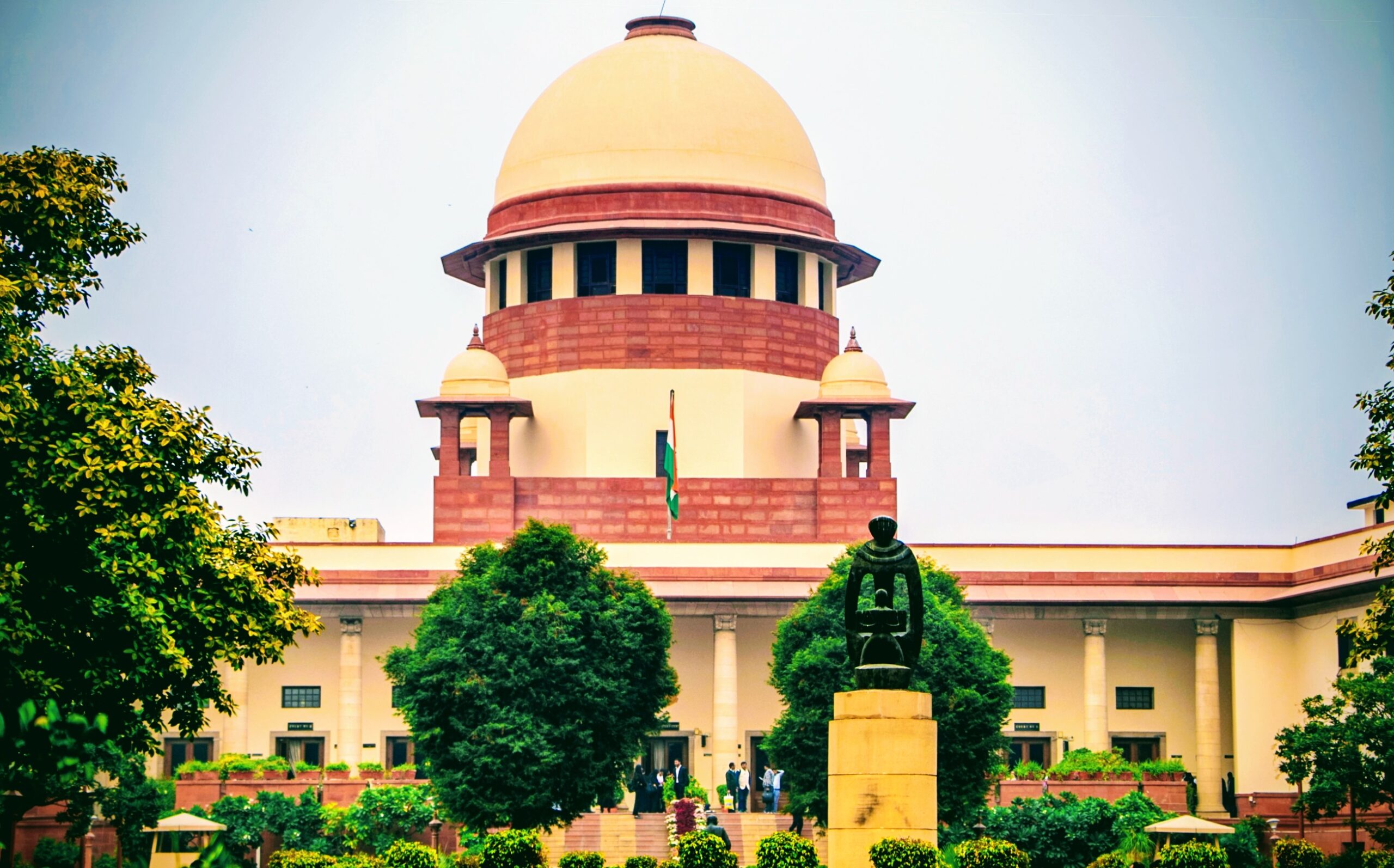
The Supreme Court of India on Thursday ordered that the University Grants Commission (Promotion of Equity in Higher Education Institutions) Regulations, 2026 be kept in abeyance, after expressing serious prima facie concerns regarding their vagueness, potential misuse, and divisive impact on society.
A Bench comprising “,”Justice Surya Kant”,”chief justice of india”, Chief Justice of India, and ,”Justice Joymalya Bagchi”,”supreme court judge” was hearing three writ petitions challenging the constitutional validity of the 2026 Regulations. The petitions were filed by Mritunjay Tiwari, Advocate Vineet Jindal, and Rahul Dewan, who contend that the Regulations discriminate against students belonging to the general category.
The Court issued notice to the Union of India and the ,”University Grants Commission”, returnable on March 19, and directed that UGC Regulations, 2012 shall continue to operate in the interim.
Court’s Prima Facie Concerns
During the hearing, the Bench orally flagged multiple concerns with the 2026 Regulations, observing that:
The provisions are vague and capable of misuse.
The separate definition of “caste-based discrimination” appears redundant when a broader definition of “discrimination” already exists.
Ragging has been entirely omitted, despite being a prevalent form of harassment in educational institutions. Certain remedial measures risk deepening social divisions rather than promoting unity.
CJI Surya Kant suggested that the Regulations require a comprehensive revisit by a committee comprising eminent jurists and social thinkers:-
“Some committee should be there with eminent jurists… who understand social values and ailments society is facing. How the entire society should grow… they must apply their mind.”
Challenge to Regulation 3(1)(c): Alleged Violation of Article 14
Advocate Vishnu Shankar Jain, appearing for one of the petitioners, assailed Regulation 3(1)(c), which defines “caste-based discrimination” as discrimination only against SCs, STs, and OBCs.
He argued that:
Regulation 3(1)(e) already defines “discrimination” in a comprehensive manner. The separate definition presumes that only certain communities can be victims of caste-based discrimination. The provision lacks reasonable nexus with the stated objective and is hit by Article 14 of the Constitution.
“When Regulation 3(e) is already in place, what is the need for 3(c)? It presumes that only a particular section faces caste-based discrimination,” Jain submitted.
The Bench queried whether Regulation 3(1)(e) would adequately cover instances where discrimination occurs without reference to caste identity, such as regional or cultural harassment. Jain answered in the affirmative.
Another counsel highlighted a scenario where a general category fresher faces ragging by a senior belonging to a reserved category, arguing that the present Regulations offer no remedy in such cases and may even expose the victim to counter-allegations.
CJI Surya Kant questioned why ragging was excluded altogether:
“Why the Regulations do not address ragging and why it is assumed that only caste-based discrimination exists? Most harassment happens on junior-senior lines.”
Justice Bagchi echoed the concern, pointing out that educational institutions must reflect unity in India, not reinforce divisions.
“Are We Becoming Regressive?” – Court’s Broader Social Concerns
The Bench also expressed discomfort with certain remedial suggestions, such as separate hostels for different castes.
“For God’s sake, don’t do this! We all used to stay together… There are inter-caste marriages also,” CJI Surya Kant remarked.
The Court questioned whether the Regulations undermine the constitutional goal of a casteless society, noting that economic prosperity among many Scheduled Caste members has altered traditional social realities.
Justice Bagchi further invoked the principle of non-regression, observing:
“If the 2012 Regulations spoke of a more widespread, all-inclusive policy, why should there be a regression in a protective, ameliorative framework?”
Defence of the Regulations
Senior Advocate Indira Jaising, appearing in the 2019 PIL filed by Radhika Vemula and Abeda Salim Tadvi, defended the 2026 Regulations. The PIL had led to the framing of the present regulatory regime following the tragic deaths of Rohit Vemula and Payal Tadvi, allegedly due to caste-based discrimination.
Jaising opposed the stay, arguing that keeping the Regulations in abeyance would leave students remediless. The Bench, however, clarified that the 2012 Regulations would stand revived to ensure continuity of protection.
Court’s Final Direction
Invoking its powers under Article 142, the Supreme Court ordered:
“The 2026 Regulations are kept in abeyance. The 2012 Regulations shall continue in force till further orders.”
Conclusion
The Supreme Court’s order reflects a cautious approach toward social justice legislation that, while well-intentioned, may have far-reaching and unintended consequences. By reviving the 2012 framework and seeking a reconsideration of the 2026 Regulations through expert deliberation, the Court has emphasized the need for clarity, inclusiveness, and social cohesion in higher education governance.
The matter will now be considered further on March 19, when the Union and UGC respond to the Court’s concerns.