Court Finds Discrimination in Compassionate Appointment Under SRO 43 of 1994
31-10-2025
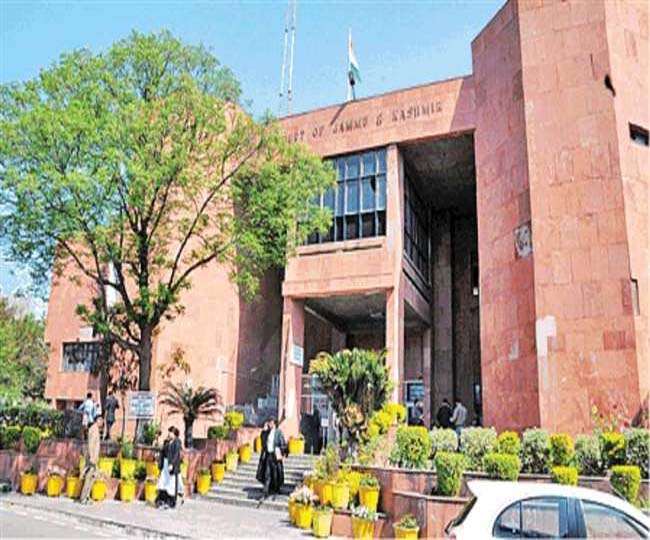
In a notable judgment reinforcing fairness in compassionate appointments, the High Court of Jammu & Kashmir and Ladakh at Jammu has upheld the order of the Central Administrative Tribunal (CAT), Jammu, directing the authorities to appoint Bhavtej Singh Isher as Junior Engineer (Mechanical) instead of Fitter under SRO 43 of 1994. The Division Bench comprising Justice Sanjeev Kumar and Justice Sanjay Parihar dismissed the writ petition filed by the Union Territory of Jammu & Kashmir, holding that the plea of estoppel raised by the authorities had no merit.
Background of the Case
The respondent, Bhavtej Singh Isher, a B.Tech (Mechanical) graduate, applied for compassionate appointment after the demise of his father, who served as an Executive Engineer in the Jal Shakti (PHE) Department. Although the Chief Engineer recommended his appointment as Junior Engineer (Mechanical), the General Administration Department (GAD) advised the department to offer a lower post. Consequently, he was appointed as Fitter on 21.06.2021, and joined on 24.06.2021. However, within just twelve days, on 06.07.2021, he challenged the appointment before the Tribunal, claiming that he was entitled to the post of Junior Engineer, similar to others with equivalent qualifications who were given higher posts under Rule 3(2) of SRO 43 of 1994.
Authorities’ Argument and Plea of Estoppel
The petitioners argued that the respondent, having accepted the post of Fitter, was estopped from claiming a higher post. They contended that compassionate appointment beyond the lowest non-gazetted post lies within the discretion of the Government and cannot be demanded as a matter of right.
Court’s Observations
Rejecting the plea of estoppel, the High Court held that the applicant’s acceptance of the Fitter post was a result of financial compulsion following his father’s untimely death. The Court observed:
The respondent, who was in dire financial distress, had no option but to accept whatever was offered to him. However, he immediately registered his protest by filing a petition within twelve days.
The Bench further found that the respondent was not differently situated from other candidates namely, Ishan Jasrotia, Mohsin Shakeel Khan, Akumjeet Singh Dhillon, and Abhishek Ashok Charak who were appointed as Junior Engineers on compassionate grounds under Rule 3(2) of SRO 43 of 1994.
The authorities failed to produce any material justifying why Bhavtej Singh’s case was treated differently.
Interpretation of Rule 3(2) of SRO 43 of 1994
The Court elaborated that Rule 3(2) empowers the General Administration Department to make appointments on higher posts in exceptional cases. However, such discretion must be supported by valid reasons and exercised uniformly to prevent arbitrariness.It observed:
The Government’s discretion under Rule 3(2) must be exercised suo motu or otherwise only in exceptional cases, and the competent authority must record reasons for such exercise of power.”
Since other similarly qualified candidates had been appointed as Junior Engineers without stated reasons, the Tribunal was right in directing parity of treatment.
Judgment Outcome
The High Court dismissed the writ petition, holding that there was no ground to interfere with the Tribunal’s decision. It directed the authorities to implement the Tribunal’s order and verify the respondent’s qualifications before issuing his appointment as Junior Engineer (Mechanical).
The connected Contempt Petition (CCP(D) No. 2/2025) was accordingly disposed of as infructuous.
Key Takeaways
The plea of estoppel does not apply where acceptance of a post is driven by financial necessity.
Rule 3(2) of SRO 43 of 1994 empowers the Government to make higher appointments, but such discretion must be reasoned and non-discriminatory.
Equal treatment must be ensured among similarly qualified candidates seeking compassionate appointment.
Acceptance under compulsion followed by prompt challenge does not amount to waiver of rights.
Conclusion
This judgment underscores the principle that discretionary powers in compassionate appointments cannot be exercised arbitrarily. It ensures equality, transparency, and fairness in administrative decision-making, reinforcing that compassion must not become a tool for discrimination.
Case Details
Case Title: Union Territory of Jammu & Kashmir & Others v. Bhavtej Singh Isher
Case No.: WP(C) No. 2785/2024 c/w CCP(D) No. 2/2025
Court: High Court of Jammu & Kashmir and Ladakh at Jammu
Bench: Justice Sanjeev Kumar & Justice Sanjay Parihar
Date of Judgment: 10 October 2025
Citation: 2025 (J&K High Court)
Advocates: Ms. Monika Kohli, Sr. AAG for Petitioners; Mr. Farhan Mirza for Respondent
Keywords:
J&K High Court judgment 2025, SRO 43 of 1994, compassionate appointment, Rule 3(2) discretion, plea of estoppel, Bhavtej Singh Isher case, Junior Engineer appointment, equality in public employment, administrative fairness, CAT Jammu.
- Summary Judgment in Commercial Suits: A Powerful Tool Under Order XIII-A CPC
 2 May 2026 The introduction of Order XIII-A into the Code of Civil Procedure, 1908 through the Commercial Courts Act,…
 - Delhi High Court Convicts YouTuber for Criminal Contempt: Limits of Free Speech in Judicial Criticism
 In a significant ruling reinforcing the boundaries of free speech, the Delhi High Court has convicted a YouTuber for criminal…
 - Supreme Court Mandates Disclosure Norms in Bail Applications: A Step Towards Transparency in Bail JurisprudenceShivaji Rathore 27-04-2026 In a significant development aimed at enhancing transparency, uniformity, and fairness in bail adjudication, the Supreme Court…
- Discharge by Criminal Court Bars Administrative Action Under Air Force LawShivaji Rathore 17 April 2026 In a significant development in service jurisprudence under military law has clarified the limits of…
- Delhi High Court: Dried Leaves and Small Branches Not ‘Ganja’ Under NDPS Act; Bail GrantedShivaji Rathore 17 April 2026 The Delhi High Court has recently delivered a significant ruling clarifying the scope of the…