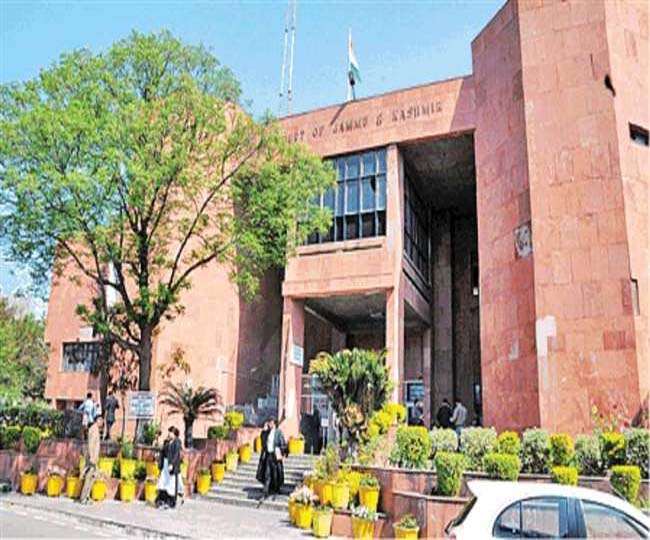
In a significant ruling clarifying the scope of protection available to bank officials, the Jammu & Kashmir and Ladakh High Court has held that although bank employees may fall within the definition of “public servants” under Section 21 of the Ranbir Penal Code (RPC), they are not entitled to the protective shield of Section 197 of the Code of Criminal Procedure, 1973.
The Court emphasized that the statutory protection under Section 197 CrPC is limited in its application and extends only to those public servants who cannot be removed from office except by or with the sanction of the Government. Since bank officials do not fall within this category, they cannot seek immunity from prosecution for offences under the RPC or IPC.
This observation came in a petition filed under Section 561-A of the J&K CrPC (analogous to Section 482 CrPC and Section 528 BNSS), where two officials of Jammu & Kashmir Bank Ltd.—a Branch Manager and a Zonal Head—sought quashing of criminal proceedings initiated against them.
The petition challenged an order of the Judicial Magistrate, Rajouri, who had issued process against the officials for alleged offences under Sections 420, 504, and 506 RPC. The complaint alleged that the officials had taken ₹2.50 lakhs from the complainant on the promise of providing employment and later subjected him to threats and abusive language.
Justice Rajnesh Oswal, while rejecting the contention of the petitioners regarding prior sanction, categorically held that:
“While the petitioners may fall within the definition of ‘public servants’… Section 197 CrPC specifically extends protection only to those who are not removable from office except by or with the sanction of the Government… the petitioners, as bank employees, cannot invoke Section 197 as a shield against prosecution.”
The Court relied on its earlier decision in State Bank of India Anantnag v. G. M. Jamsheed, reiterating that while bank officials may qualify as public servants, no prior sanction is required for their prosecution under IPC/RPC provisions, as they are removable without government sanction.
On examining the merits of the complaint, the Court found serious deficiencies. It observed that the allegations were “fatally vague”, lacking crucial details such as the exact date, time, and place of the alleged payment. The claim that one petitioner acted at the instance of the other was found to be unsupported by any material or source of knowledge.
The High Court also referred to the Supreme Court’s judgment in Pepsi Foods Ltd. v. Special Judicial Magistrate (1994) 5 SCC 749, reiterating that summoning an accused is a serious matter and cannot be done in a routine or mechanical manner. Magistrates are required to carefully scrutinize the material and apply judicial mind before issuing process.
Critically evaluating the Magistrate’s order, the Court held that the issuance of process was done in a perfunctory and mechanical manner, without addressing material ambiguities or testing the veracity of the allegations.
The Court observed:
“…the issuance of process appears to have been made in a routine manner rather than as a result of a reasoned judicial determination… the impugned order suffers from a fundamental lack of application of mind.”
Consequently, the High Court set aside the Magistrate’s order issuing process. However, it clarified that the complaint itself was not quashed. Instead, the matter was remitted back to the trial court for fresh consideration in accordance with law.
This judgment reinforces two critical legal principles: first, that Section 197 CrPC protection is narrowly tailored and cannot be broadly claimed by all public servants, and second, that criminal proceedings cannot be initiated casually without proper judicial scrutiny.
Case Details:
Case Title: Jasmeet Singh & Anr. v. Shafi Ahmed
Court: High Court of Jammu & Kashmir and Ladakh at Jammu
Coram: Justice Rajnesh Oswal
Decision Date: 10.04.2026
Citation: CRMC No. 1/2019