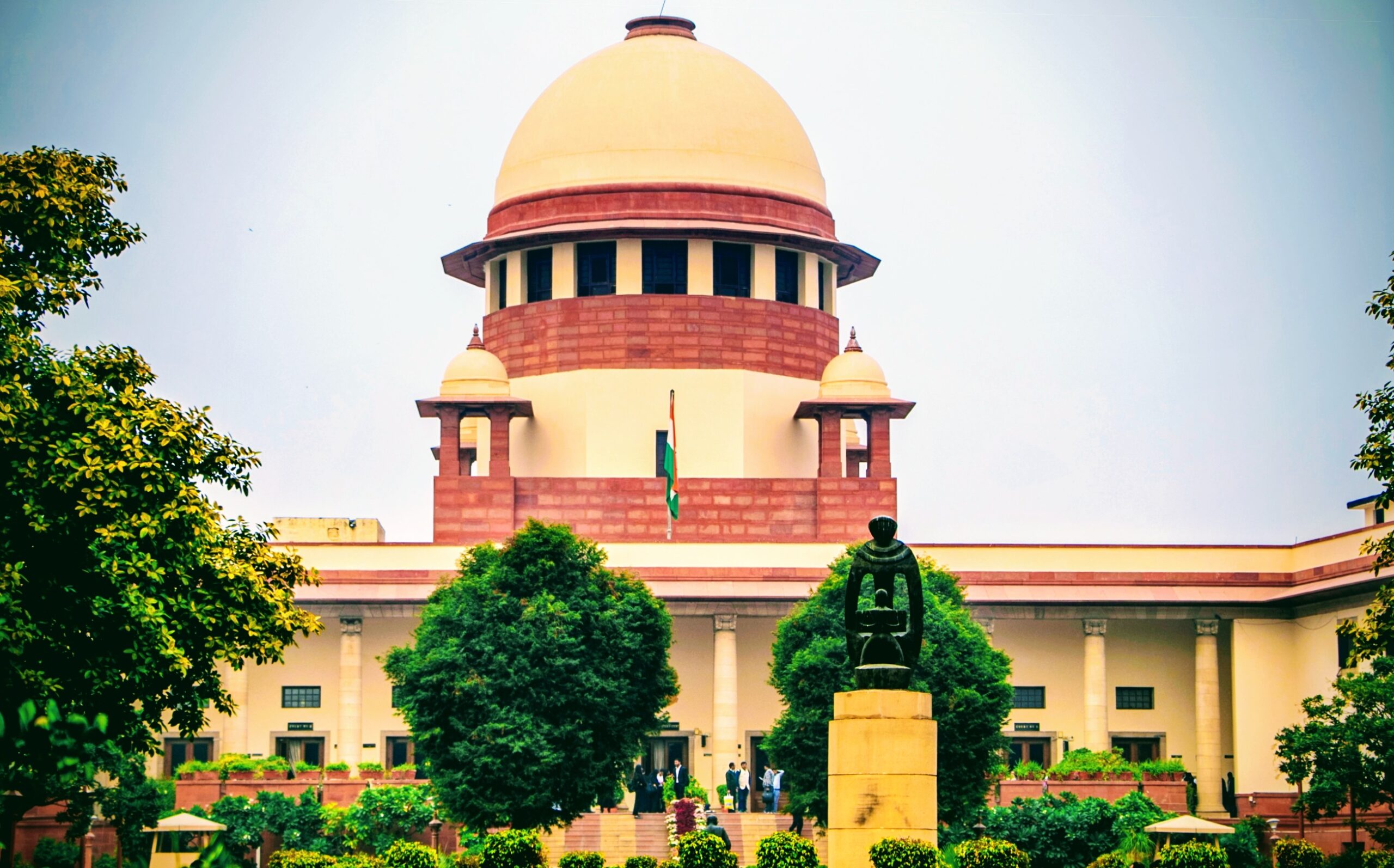
The Supreme Court of India has reiterated a crucial principle in bail jurisprudence, holding that statements recorded under Section 161 of the Code of Criminal Procedure, though not admissible as substantive evidence during trial, are nonetheless relevant for assessing the existence of a prima facie case at the stage of deciding bail applications in serious offences. This ruling underscores the responsibility of courts to meaningfully examine the material collected during investigation, especially where allegations are grave in nature.
The observation came in Indresh Kumar vs State of Uttar Pradesh, where a bench comprising Justice Indira Banerjee and Justice V. Ramasubramanian set aside an order of the Allahabad High Court granting bail to an accused charged with the rape and murder of an eleven-year-old child. The apex court found that the High Court had failed to consider material evidence on record, including incriminating statements of witnesses recorded under Sections 161 and 164 Cr.P.C., thereby demonstrating a lack of proper judicial application of mind.
The Court clarified that while statements under Section 161 Cr.P.C. may not be admissible during trial due to their limited evidentiary value, they cannot be ignored at the stage of bail, particularly in cases involving heinous offences. At this preliminary stage, courts are required to form only a prima facie view, and such statements form part of the investigative record that may indicate the involvement of the accused. Where allegations are ex facie grave and supported by available material, it would be erroneous to conclude that there is no case against the accused.
Critically examining the reasoning adopted by the High Court, the Supreme Court noted that bail had been granted largely on the ground of parity with a co-accused and by placing reliance on the decision in Dataram Singh vs State of U.P.. The Court held that such reliance was misplaced, as the principles laid down in Dataram Singh arose in a different factual context involving prolonged detention in a cheque dishonour case. Those observations could not be mechanically applied to a case involving allegations of rape and murder of a minor.
The Court further emphasized that while considering bail, courts must evaluate the seriousness of the offence, the severity of punishment upon conviction, the nature of evidence, and the likelihood of the accused fleeing from justice or tampering with evidence. In the present case, the allegations included not only the commission of rape and murder but also the concealment of evidence, which reflected a deliberate attempt to evade the process of law. Such conduct weighed heavily against the grant of bail.
Additionally, the Supreme Court observed that the High Court had failed to take into account the criminal antecedents of the accused. The Court reiterated that antecedents are a relevant consideration in bail matters, particularly in assessing the risk of reoffending or absconding. Ignoring such factors, especially in serious offences, amounts to an improper exercise of judicial discretion.
Setting aside the bail order, the Supreme Court concluded that the High Court had not adequately considered the gravity of the allegations or the material available on record. However, it clarified that its observations were confined to the determination of bail and would not influence the outcome of the trial on merits.
This judgment reinforces the principle that while the right to personal liberty is fundamental, it must be balanced against the demands of justice, particularly in cases involving heinous crimes. The decision serves as a reminder that courts must exercise their discretion cautiously and judiciously, ensuring that all relevant materials, including statements recorded during investigation, are duly considered before granting bail.
Case Details:
Indresh Kumar vs State of Uttar Pradesh | 2022 LiveLaw (SC) 610 | Criminal Appeal No. 938 of 2022 | Decided on 12 July 2022 | Bench: Justice Indira Banerjee and Justice V. Ramasubramanian